The FGRES team started a new research project BreVERNE (Sustainably integrating the realities of Bremen’s (heating) utility providers and residents) on September 1, 2026. The two-and-a half year project is funded by the Federal Ministry of Research, Technology and Space (BMFTR) and will be carried out in cooperation with Prof. Dr. Jürgen Knies from the City University of Applied Sciences (HSB). From the FGRES team, Cristina Oballe and Jannes Katner will be primarily involved in the project.
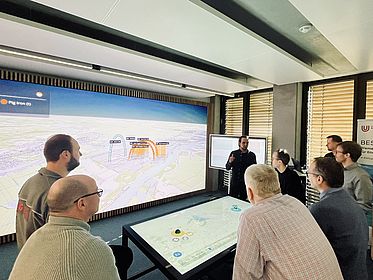
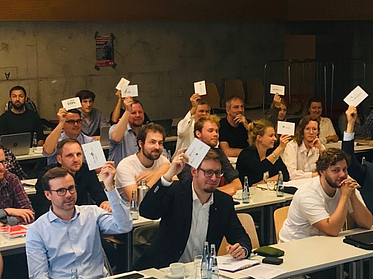
BreVERNE examines the heat transition as a complex socio-technical transformation in which households, property owners, energy suppliers and the city face interdependent challenges. The project investigates which factors shape the acceptance and adoption of different heating solutions across stakeholder groups and how techno-economic pathways can be integrated with the realities of local actors. Building on this, BreVERNE develops a low-threshold decision-support tool to make complex modelling results accessible for different user groups in municipal heat planning. Participatory research processes are used to examine how engagement influences stakeholders’ perceptions, attitudes and intentions to act. By combining techno-economic analyses, digital planning tools and participatory approaches in selected Bremen neighbourhoods, the project aims to identify synergies between efficiency, economic viability and social acceptance and develop practical decision-making support for the urban heat transition.