From where do we get raw materials on the red planet?
Presentations from all three Research Areas kicked off the event at the conference hotel. The main goal of the first area is the generation of raw materials in a way that is as resourceful as possible. On the surface of Mars, there are barely any resources apart from sunlight, gas and the planet’s distinctive sand, called Regolith, that covers its surface. Because of this, fossil fuels are simply not available. Therefore, any and all processes this cluster is working on need to be based on other means of generating energy and material. The goal is to one day transfer these sustainable technologies onto Earth and help to rethink the industrial processes on our home planet that are currently harming our environment.
How do you produce anything under extreme conditions?
After the materials are sourced, they next have to be treated in the following steps of the production chain. This happens in the second research area of the Cluster: “Processing”. Here, mainly materials scientists are working on reshaping raw materials. But they are doing more than that: they are also designing process chains that get digitally modelled and can be used to make predictions.
Throughout all of this, one concept is always at the forefront: “enough to use” is the idea of creating materials that are just good enough to perform exactly the task they are meant for instead of being as optimized as possible. Again, this new way of thinking means saving energy and resources – both of which are exceptionally scarce on Mars.
Working together on Mars?
Last but not least, the research area “Operating” presented its work. Here, the focus lies on subsequently putting the materials stemming from the previous areas to use.
In this context, the everyday life that astronauts will need to navigate is an important focal point. Information is just as much of a scarcity as physical resources. Despite this, the people on site will have to make critical decisions based on what little data they do have.
This research area is also working on bettering the partnership between humans and robots. Machines will carry out a big part of production, while humans are only taking part from afar, safe in their base: a great challenge in engineering and logistics.
Mars researchers walking the Earth
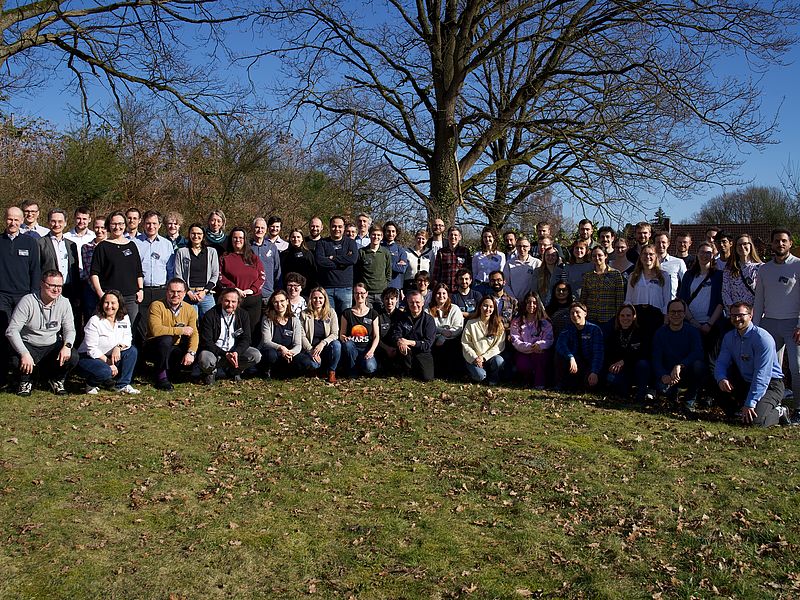
With beautiful spring weather, there was a small hike near the local national park in the afternoon, giving everyone the chance to relax and get to know each other better.
A glimpse into the future
The next morning, after both project leads and PhD-candidates met amongst themselves, the final presentations followed. This included the two groups “Data, Modeling, Uncertainty” and “Process Chains, Monitoring” as well as a workshop by the group “Demonstrator”. Outside of the three big research areas, cluster members from all over the cluster are coming together for these projects to work on these cross-cutting issues.
Background
The cluster of excellences research has a bigger goal than just enabling resourceful production on Mars. These sustainable technologies also mean a huge opportunity for Earth: by rethinking the very base of the production processes we are currently clinging to, a new paradigm of sustainability could arise on our home planet.
The work of the Cluster is financed by the German Research Foundation (DFG), going from 2026 until 2032 in the context of the excellence strategy of the country and states. During this period, the participating scientists will work out how to produce materials and components under Mars-like conditions. Through transferal onto Earth and the “enough to use” approach, a new paradigm for rethinking production and sustainability will be created.