DIFIS-SOFO is supported by the University of Duisburg-Essen and the University of Bremen, in close cooperation with additional partners in German social policy research. DIFIS-SOFO will explore how key technologies and the associated societal megatrends are affecting social risks and social policy institutions, and how social policy can help shape these changes. DIFIS-SOFO will receive €56 million from the Federal Ministry of Labour and Social Affairs (BMAS) over eight years, to be distributed among the participating research partners.
Work, society and the economy are being transformed by emerging technologies such as artificial intelligence, microelectronics, quantum technology, biotechnology and energy technology.
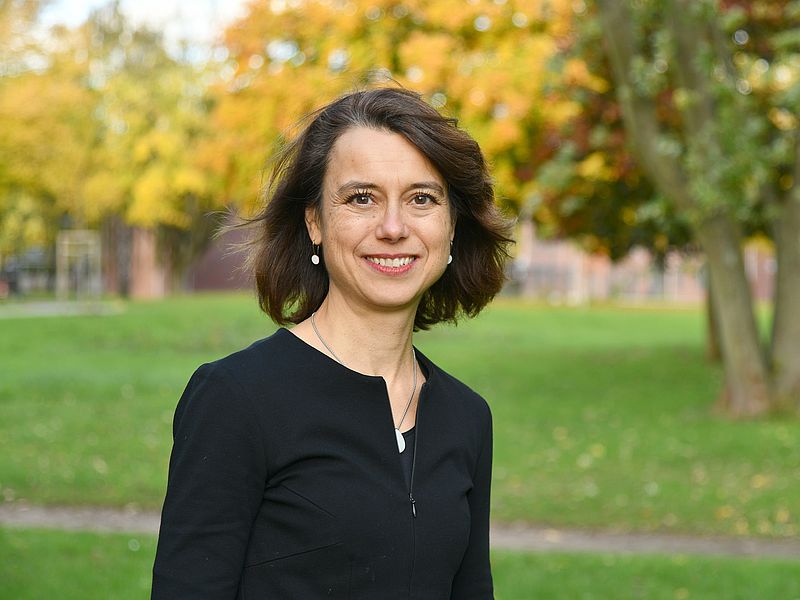
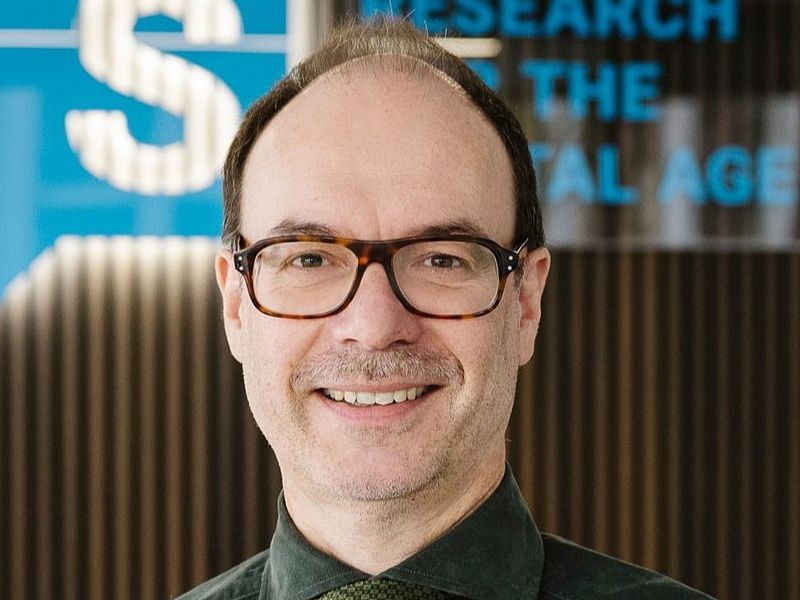
Researchers at the newly established Collaborative Research Centre of the German Institute for Interdisciplinary Social Policy Research (DIFIS-SOFO) will investigate how these developments are changing social institutions and social risks, and how social policy can help shape these changes. Prof. Dr Christoph Bieber and Prof. Dr Ute Klammer from the University of Duisburg-Essen (UDE), as well as Prof. Dr Tanja Klenk and Prof. Dr Frank Nullmeier from the University of Bremen (UB), are key participants. DIFIS-SOFO is jointly led by both universities in close cooperation with numerous additional partners in the field of German social policy research.
Prof. Dr Tanja Klenk, the co-director from Bremen, explains: “Just as key technologies rely on high-performance technical infrastructures, forward-looking social policy research on key technologies also needs its own academic infrastructure. With DIFIS-SOFO, we are creating precisely this foundation. We provide data, knowledge and academic guidance, facilitate the continuous development of the necessary methods, and build lasting networks between social policy research, technology studies, and the worlds of politics and practice.”
Prof. Dr Christoph Bieber from the University of Duisburg-Essen outlines the next steps: “DIFIS-SOFO is launching with 18 lead projects in four research areas covering key life environments: work, organizational structures, everyday life and media/discourse. Additional projects will be added at a later stage. The research teams are investigating how key technologies are transforming social policy. With DIFIS-SOFO, we aim to structurally strengthen social policy research in Germany, support excellent academic work and interdisciplinary exchange, and contribute to evidence-based policy advice.”
Project Funding
The Institute for Work, Skills and Training (IAQ) at the University of Duisburg-Essen and the SOCIUM Research Center on Inequality and Social Policy at the University of Bremen acquired funding for DIFIS-SOFO. The project has been approved for a period of eight years and will be funded by the Federal Ministry of Labour and Social Affairs (BMAS) with a total of €56 million, to be distributed among the project partners. The Collaborative Research Centre is financed through the Federal Government’s Special Fund for Infrastructure and Climate Neutrality. Through this funding, the BMAS is implementing part of Germany’s high-tech agenda.
DIFIS-SOFO Opening Ceremony: 7 September 2026 in Berlin
The Collaborative Research Centre of the German Institute for Interdisciplinary Social Policy Research (DIFIS-SOFO) will launch on 7 September 2026 with an opening ceremony in Berlin featuring distinguished guests from academia and politics.
Programme Highlights
• Welcome address by Kerstin Griese, Parliamentary State Secretary at the BMAS
• Keynote on the impact of technology on social policy by the Academic Directors of DIFIS-SOFO
• Panel discussion on technology, innovation and social participation, and the role of the welfare state in the technological transformation featuring Prof. Katharina Hölzle (Managing Director, Fraunhofer IAO), Nermin Fazlic (Head of the Policy Principles Directorate, BMAS), Prof. Tanja Klenk (Co-Leader, DIFIS-SOFO), Prof. Christoph Bieber (University of Duisburg-Essen).
Registration and Full Program:
Further Information:
https://www.fis-netzwerk.de/deutsches-institut-fuer-interdisziplinaere-sozialpolitikforschung-sonderforschungszentrum-difis-sofo (only available in German)
DIFIS-SOFO Duisburg-Essen: Prof. Dr. Christoph Bieber (Email: christoph.bieberprotect me ?!uni-dueprotect me ?!.de),
Prof. Dr. Ute Klammer (Email: ute.klammerprotect me ?!uni-dueprotect me ?!.de, Phone +49 203 3791827).
DIFIS-SOFO Bremen: Prof. Dr. Tanja Klenk (Email: tanja.klenkprotect me ?!hsu-hamburgprotect me ?!.de, Phone +49 40 6541 2801), Prof. Dr. Frank Nullmeier (Email: frank.nullmeierprotect me ?!uni-bremenprotect me ?!.de).
Press Contact:
University of Duisburg-Essen
Astrid Bergmeister, Head of Press
Email: astrid.bergmeisterprotect me ?!uni-dueprotect me ?!.de, Phone: +49 203 379-2430
University of Bremen
University Communication and Marketing
Email: presseprotect me ?!uni-bremenprotect me ?!.de, Phone: +49 421 218-60150