artec Sustainability Research Center

The Sustainability Research Center (artec) is an interdisciplinary Center of the University of Bremen for scientific research on sustainability issues. This „Central Research Unit“ is made up of professors from different faculties, currently including Social Sciences, Production Engineering, Cultural Studies, Pedagogy and Educational Sciences, and Human and Health Sciences.
The aim of the Center is to perform interdisciplinary research on national and international sustainability issues and to provide scientific advice in order to support sustainable development in key areas.

find out more:
10. Nov
Gewalt im Kontext der Erwerbsarbeit
SFG 1010
16:00 − 19:00
find out more: Gewalt im Kontext der Erwerbsarbeit
24. Nov
Gewalt in der digitalen Transformation
SFG 1010
16:00 − 19:00
find out more: Gewalt in der digitalen Transformation
08. Dec
Strukturelle Gewalt gegen Frauen & weiblich gelesene Personen
SFG 1010
16:00 − 19:00
find out more: Strukturelle Gewalt gegen Frauen & weiblich gelesene Personen
05. Jan
Gewalt in privaten Beziehungen (häusliche Gewalt)
SFG 1010
16:00 − 19:00
find out more: Gewalt in privaten Beziehungen (häusliche Gewalt)
19. Jan
Internationale Perspektive auf Strafrecht und Geschlecht
SFG 1010
16:00 − 19:00
find out more: Internationale Perspektive auf Strafrecht und Geschlecht

News


Abstrakte Formen in Lila und Gelb, darauf die Logos von World of Contradictions und Universität Bremen

Working and living without violence

We would like to invite you to a new Open Lecture Series of the Worlds of Contradictions Research Lab "Violence, Age & Gender" in the winter term 2026/2027

find out more: Working and living without violence

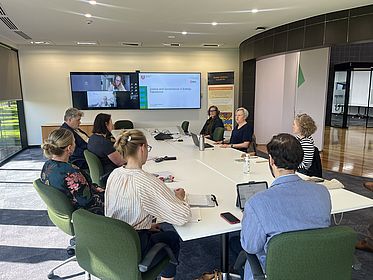
In a conference room, people are sitting around a table listening to Stefanie Baasch’s presentation; other online participants can be seen on screens on the wall.

Discussing Just Energy and Hydrogen Transitions in Germany and Australia

PD Dr Stefanie Baasch is bringing together expertise from Bremen and Australia on the social dimensions of the energy transition through the establishment of an international research collaboration – she was recently invited to Gippsland for discussions on this topic

find out more: Discussing Just Energy and Hydrogen Transitions in Germany and Australia

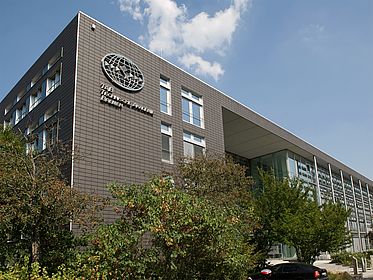
Outside view of the ECO 5/TAB building

We have moved!

We are now located on the 2nd floor of the ECO 5 building (entrance A) at Am Fallturm 1, 28359 Bremen

find out more: We have moved!

A stone-paved footpath leads through a wild meadow to a white house with a sign saying ‘Bicycle hire’.

Mobility cultures in the Ellener Hof bicycle neighbourhood – A new analytical and design framework for local mobility concepts

In a new artec paper, Leandra Schmeißer applies the concept of mobility cultures to the Ellener Hof neighbourhood in Bremen in order to better understand everyday mobility there. This new approach provides valuable insights for the mobility transition at the neighbourhood level

find out more: Mobility cultures in the Ellener Hof bicycle neighbourhood – A new analytical and design framework for local mobility concepts

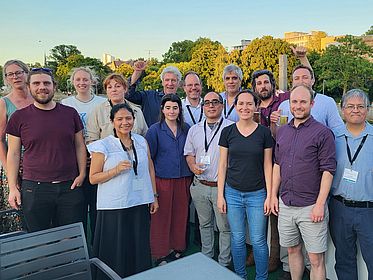
Group photo of the members of the Humboldt Tipping project on a river ferry

How do tipping points emerge, and how can they be mitigated? GlobalTip concludes successfully with a closing conference

Projects funded by the BMFTR's GlobalTip initiative investigated various regions of the world where ecosystems are at risk of tipping. The initiative concluded with a conference held in Frankfurt am Main on 1–2 July 2025, where artec presented results of the Humboldt Tipping sub-project.

find out more: How do tipping points emerge, and how can they be mitigated? GlobalTip concludes successfully with a closing conference

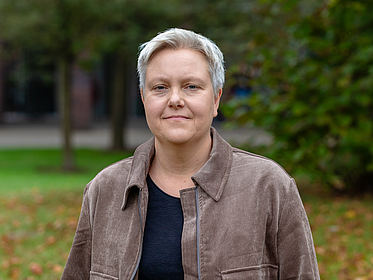
Photo of Stefanie Baasch

“Climate Action Needs Social Sciences”

In an interview with the U Bremen online magazine up2date, artec’s Stefanie Baasch explains why the Augsburg Appeal (Augsburger Aufruf) calls for human geography, sociology, and other disciplines to play a greater role

find out more: “Climate Action Needs Social Sciences”