
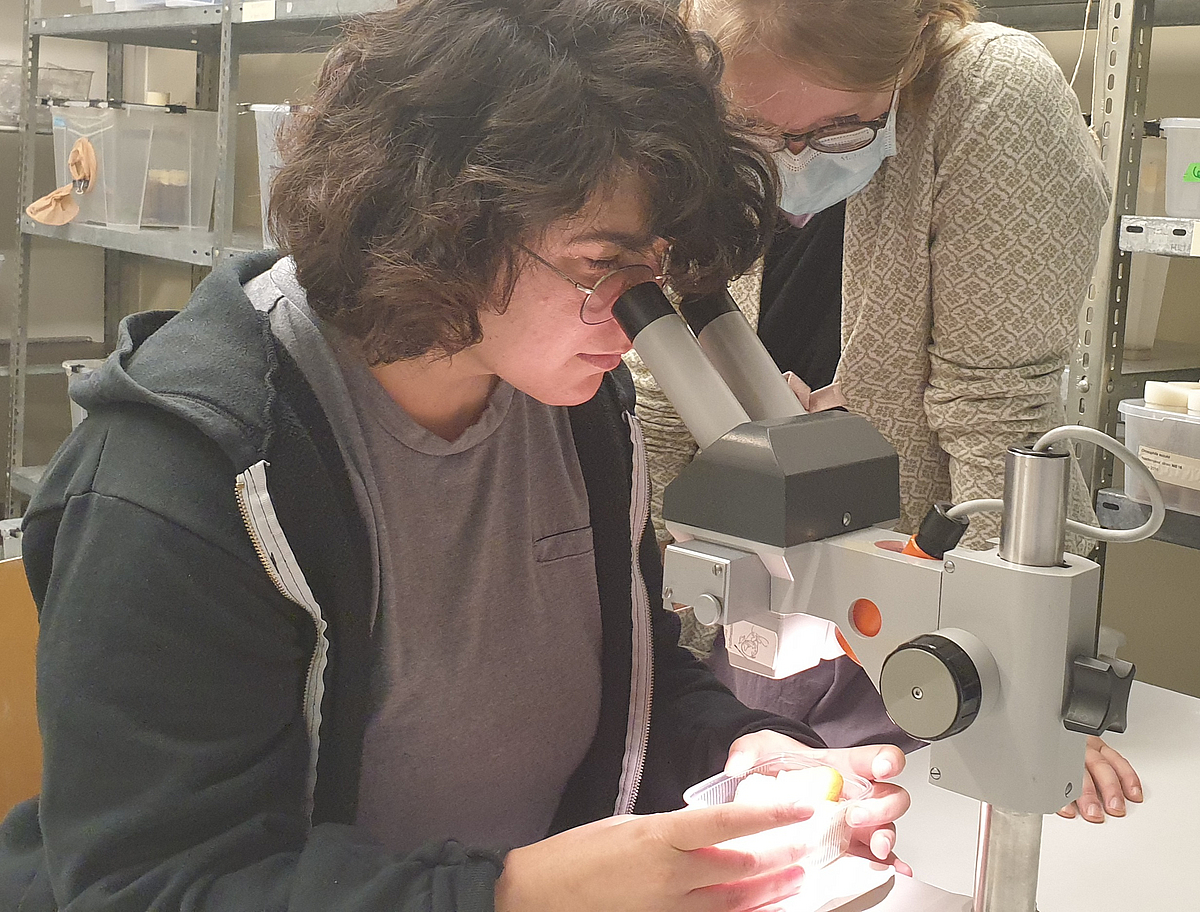
Alexandra and Elisabeth examine a fruit sample for beckoning nematodes waiting for an insect "taxi" to take them to a fresh fruit.
Research
Insect "taxi"
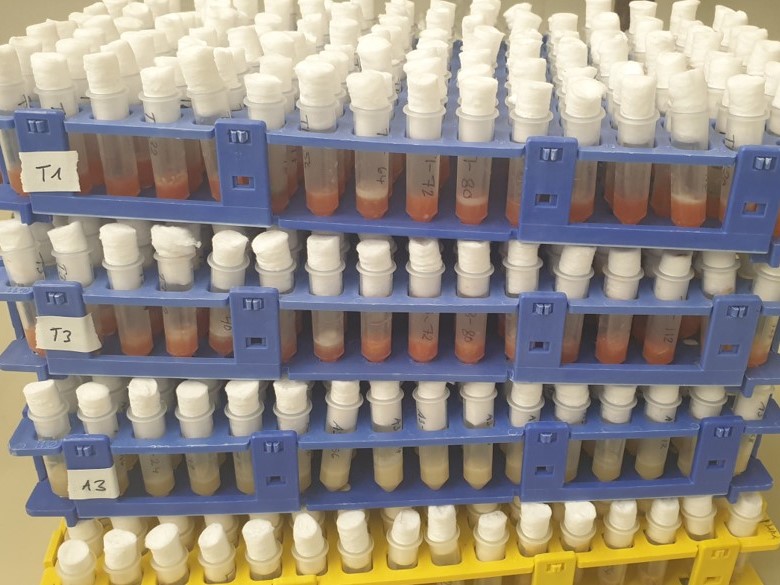
High replication
We use easy-to-manipulate microcosms that enable complex and highly replicated experiments.
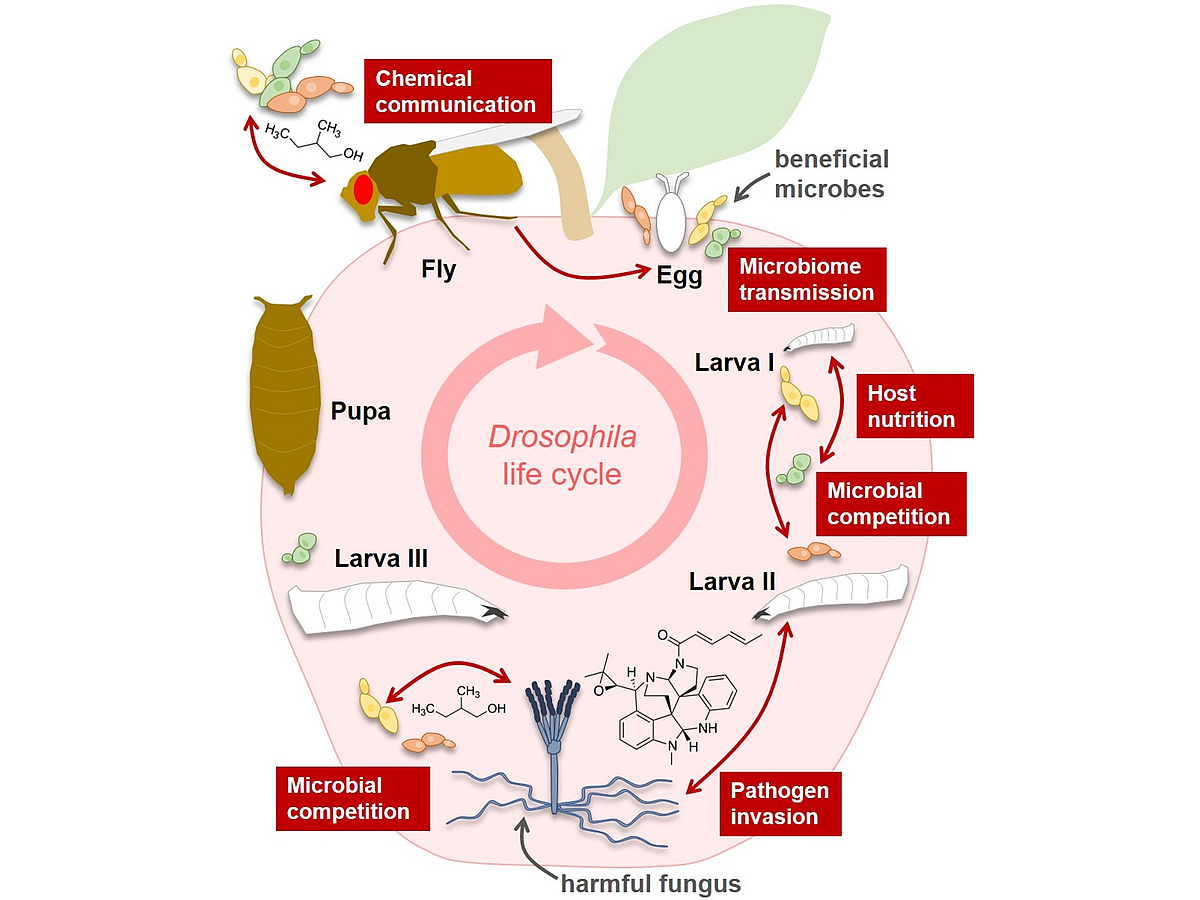
Mini-ecosystem
Drosophila-microbe interactions comprise complex reciprocal adaptations and “chemical warfare”.
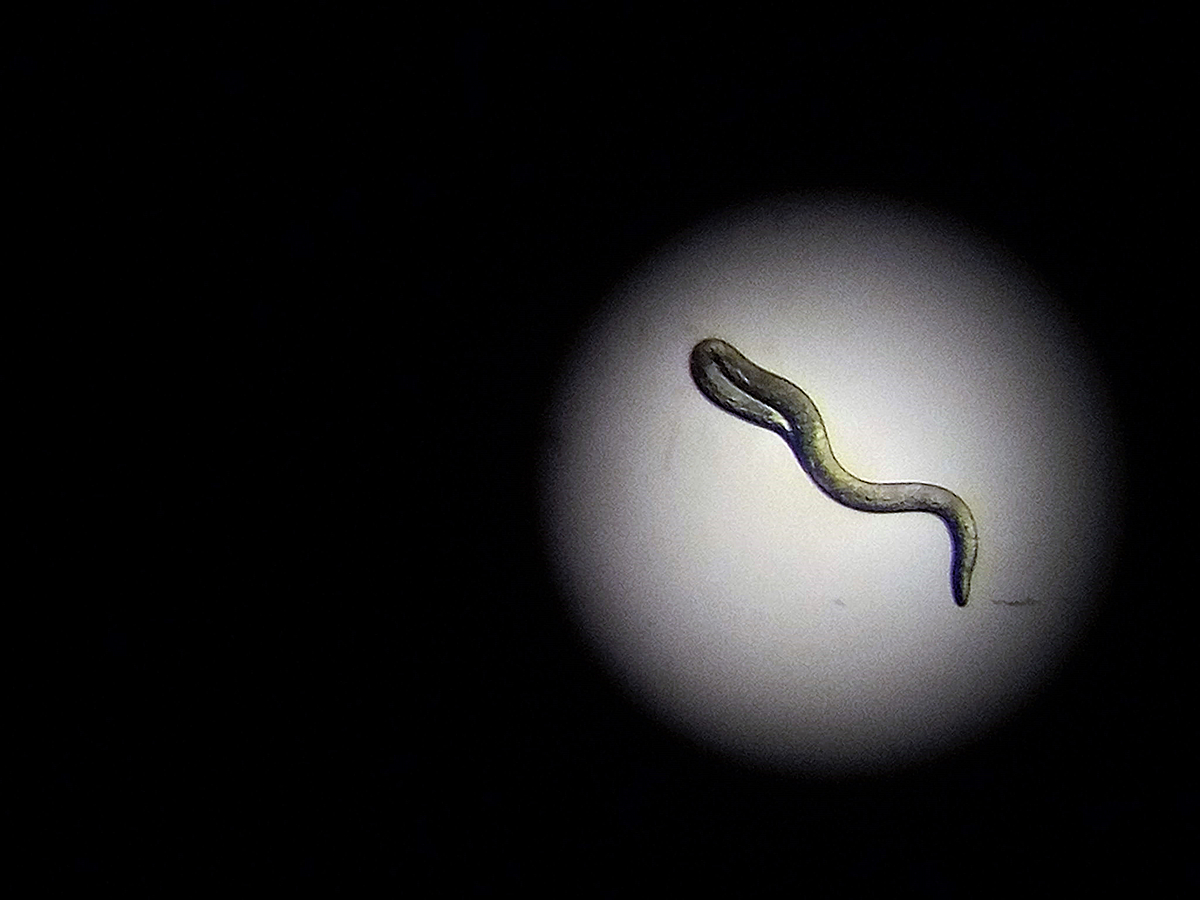
Flies have worms
Panagrellus nematode worms are vectored by Drosophila fruit flies and colonise the insect egg-laying sites. But do the insects care about worms?
How insects and microbes interact for their ecological and evolutionary success
Excluding microorganisms - bacteria and fungi - from animal ecology leaves out a fascinating diversity of species interactions that are crucial to the evolution of animals life-history strategies, behaviour, sociality and the ability to adapt to a changing environment. We are interested in better understanding the “microbial dimension” of insect ecology and evolution. In particular, our group focusses on the following topics:
- Insects as microbe farmers - behavioural and physiological traits involved in the “management” of microbiota, incl. pathogens and beneficial symbionts (Biedermann & Rohlfs 2017; Trienens & Rohlfs 2020; Biedermann et al. 2021)
- Reproductive niche width as a function of microbiota-environment interactions (Kienzle et al. 2020)
- Microbial metabolites as drivers of insect-microbiota interaction outcomes (Rohlfs 2014; Caballero Ortiz et al. 2018; Holighaus & Rohlfs 2019)
Our main ecological models are Drosophila fruit flies and their associated bacterial and fungal communities.