Highlights


TOC-Picture

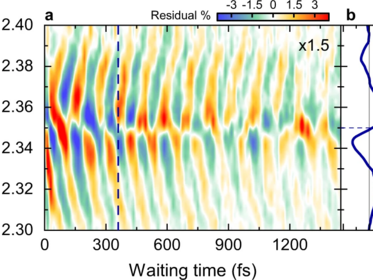
Toward a Complete Theory of Crystal Vibrations: Viewpoint on Phys. Rev. X 13, 031026 (2023)

Jan Berges

Physics 16, 151 (2023)

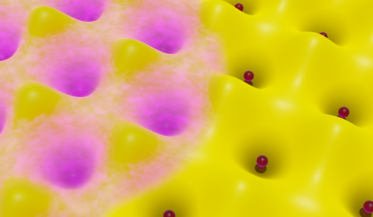
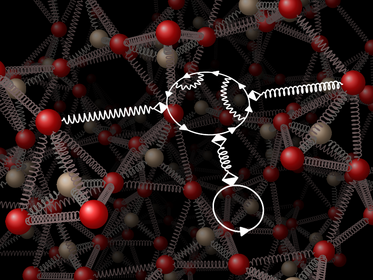
Although a crystal is a highly ordered structure, it is never at rest: its atoms are constantly vibrating about their equilibrium positions—even down to zero temperature. Such vibrations are called phonons, and their interaction with the electrons that hold the…

find out more: Toward a Complete Theory of Crystal Vibrations: Viewpoint on Phys. Rev. X 13, 031026 (2023)

Density functional theory study of hydrophobic zeolites for the removal of triclosan from aqueous solution

Michael Fischer

Environ. Sci.: Adv. 2, 1082-1098 (2023)

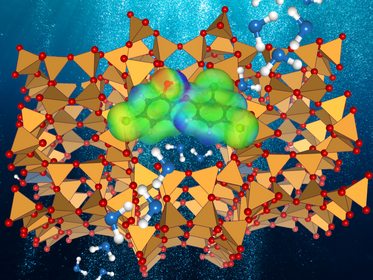
The chlorinated biphenyl ether triclosan (TCS), used as a disinfectant in health care settings and in various personal care products, is an emerging organic contaminant of significant concern. Adsorption-based methods have been proposed as…

find out more: Density functional theory study of hydrophobic zeolites for the removal of triclosan from aqueous solution

TOC-Bild

Machine Learning Enhanced DFTB Method for Periodic Systems: Learning from Electronic Density of States

Wenbo Sun, Guozheng Fan, Tammo van der Heide, Adam McSloy, Thomas Frauenheim, and Bálint Aradi

J. Chem. Theory Comput. 19, 13 (2023)

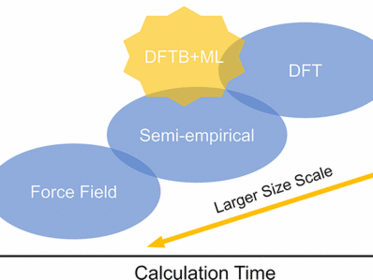
Density functional tight binding (DFTB) is an approximate density functional based quantum chemical simulation method with low computational cost. In order to…

find out more: Machine Learning Enhanced DFTB Method for Periodic Systems: Learning from Electronic Density of States

An in-silico NMR laboratory for nuclear magnetic shieldings computed via finite fields: Exploring nucleus-specific renormalizations of MP2 and MP3

Jonathan Wong, Brad Ganoe, Xiao Liu, Tim Neudecker, Joonho Lee, Jiashu Liang, Zhe Wang, Jie Li, Adam Rettig, Teresa Head-Gordon, Martin Head-Gordon

J. Chem. Phys. 158, 164116 (2023)

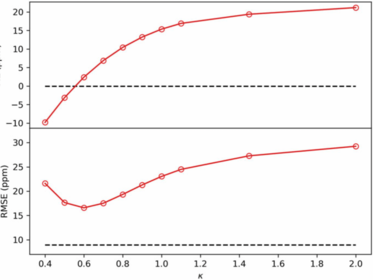
We developed and implemented a method-independent, fully numerical, finite difference approach to calculating…

find out more: An in-silico NMR laboratory for nuclear magnetic shieldings computed via finite fields: Exploring nucleus-specific renormalizations of MP2 and MP3

Multipartite-entanglement generation in coupled microcavity arrays

Marc Bostelmann, Steffen Wilksen, Frederik Lohof, and Christopher Gies

Phys. Rev. A 107, 032417 (2023)

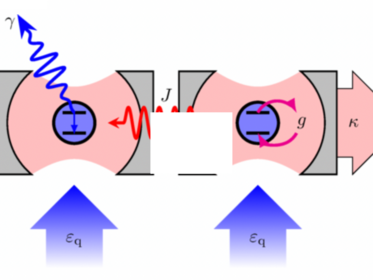
We consider photonic arrays made from quantum emitters in optically coupled microcavities as a platform for entanglement generation. These offer a large degree of tunability with the possibility…

find out more: Multipartite-entanglement generation in coupled microcavity arrays

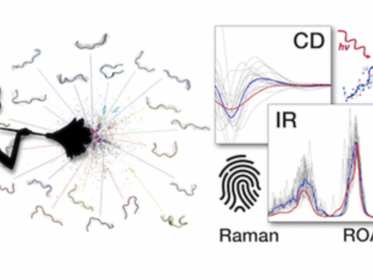
Tidying up the conformational ensemble of a disordered peptide by computational prediction of spectroscopic fingerprints

Monika Michaelis, Lorenzo Cupellini, Carl Mensch, Carole C. Perry, Massimo Delle Piane and Lucio Colombi Ciacchi

Chem. Sci. 14, 8483-8496 (2023)

The most advanced structure prediction methods are powerless in exploring the conformational ensemble of disordered peptides and proteins and for this…

find out more: Tidying up the conformational ensemble of a disordered peptide by computational prediction of spectroscopic fingerprints

Table of content figure

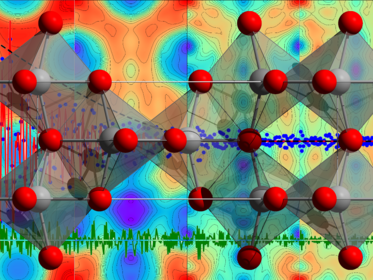
Machine learning based approach for solving atomic structures of nanomaterials combining pair distribution functions with density functional theory

Magnus Kløve, Sanna Sommer, Bo B. Iversen, Bjørk Hammer and Wilke Dononelli

Adv. Mater. 2023, 2208220

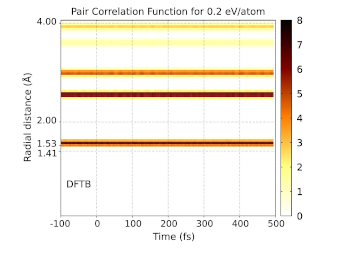
Determination of crystal structures of nanocrystalline or amorphous compounds is a great challenge in solid states chemistry and physics. Pair distribution function (PDF) analysis of X-Ray or…

find out more: Machine learning based approach for solving atomic structures of nanomaterials combining pair distribution functions with density functional theory

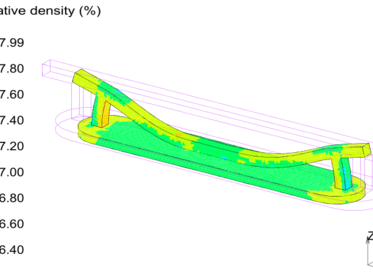
Numerical simulation of shrinkage and deformation during sintering in metal binder jetting with experimental validation

Shahrooz Sadeghi Borujeni, Anwar Shad, Kiranmayi Abburi Venkata, Nico Günther, Vasily Ploshikhin

Materials and Design 216(5):110490 (2022)

Sintering, as a post-processing step in metal binder jetting (MBJ), often results in distortion. Numerical simulations can predict sintering distortion and…

find out more: Numerical simulation of shrinkage and deformation during sintering in metal binder jetting with experimental validation

Moiré-Bose-Hubbard model for interlayer excitons in twisted transition metal dichalcogenide heterostructures

Niclas Götting, Frederik Lohof, and Christopher Gies

Phys. Rev. B 105, 165419 (2022)

In bilayers of semiconducting transition metal dichalcogenides, the twist angle between layers can be used to introduce a highly regular periodic potential modulation on a length scale that is large compared to…

find out more: Moiré-Bose-Hubbard model for interlayer excitons in twisted transition metal dichalcogenide heterostructures

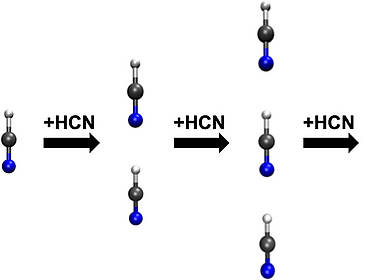
Can a Finite Chain of Hydrogen Cyanide Molecules Model a Crystal?

Chieh-Min Hsieh, Björn Grabbet, Felix Zeller, Sanna Benter, Tarek Scheele, Norman Sieroka, Tim Neudecker

ChemPhysChem e202200414 (2022)

When calculating structural or spectroscopic properties of molecular crystals, the question arises whether it is sufficient to simulate only a single molecule or…

find out more: Can a Finite Chain of Hydrogen Cyanide Molecules Model a Crystal?

Atomically Thin van der Waals Semiconductors—A Theoretical Perspective

Christopher Gies, Alexander Steinhoff

Laser Photonics Rev. 15, 2000482 (2021)

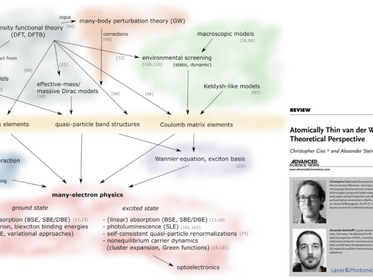
2D semiconductors and their heterostructures have developed into a flourishing research field. A more or less simultaneous start of experimental and theoretical developments has led to continuous advancements in both…

find out more: Atomically Thin van der Waals Semiconductors—A Theoretical Perspective

Implementation of the Marangoni effect in an open-source software environment and the influence of surface tension modeling in the mushy region in laser powder bed fusion (LPBF)

Florian Wirth, Teresa Tonn, Markus Schöberl, Stefan Hermann, Hannes Birkhofer and Vasily Ploshikhin

Modelling Simul. Mater. Sci. Eng. 30, 034001 (2022)

Tangential surface tension forces on a gas–liquid interface due to surface tension gradients have been implemented in the computational fluid…

find out more: Implementation of the Marangoni effect in an open-source software environment and the influence of surface tension modeling in the mushy region in laser powder bed fusion (LPBF)

TOC picture of the publication

Density functional tight binding approach utilized to study X-ray-induced transitions in solid materials

Vladimir Lipp, Victor Tkachenko, Michal Stransky, Bálint Aradi, Thomas Frauenheim & Beata Ziaja

Scientific Reports 12, 1551 (2022)

Intense X-ray pulses from free-electron lasers can trigger ultrafast electronic, structural and magnetic transitions in solid materials, within a material volume which…

find out more: Density functional tight binding approach utilized to study X-ray-induced transitions in solid materials

TOC picture of the publication

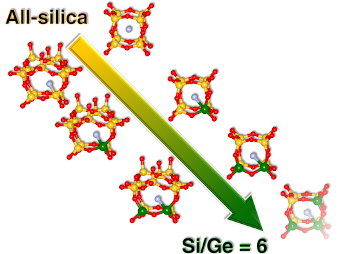
Elucidating the Germanium Distribution in ITQ-13 Zeolites by Density Functional Theory

Michael Fischer, Carlos Bornes, Luís Mafra, João Rocha

Chem.Eur. J. 28, e2021042 (2022)

ITQ-13 is a medium-pore zeolite that can be prepared in all-silica form and as silicogermanate with Si/Ge ratios as low as 3. Usually synthesised in the presence of fluoride, ITQ-13 is among the very few…

find out more: Elucidating the Germanium Distribution in ITQ-13 Zeolites by Density Functional Theory

TOC picture of the publication

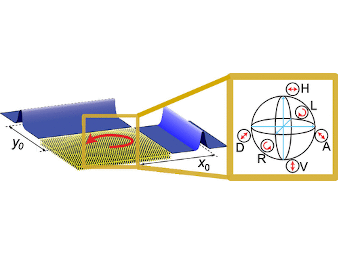
Electron Dynamics in a Two-Dimensional Nanobubble: A Two-Level System Based on Spatial Density

Roberto Rosati, Frank Lengers, Christian Carmesin, Matthias Florian, Tilmann Kuhn, Frank Jahnke, Michael Lorke, and Doris E. Reiter

Nano Lett. 21, 9896–9902 (2021)

Nanobubbles formed in monolayers of transition metal dichalcogenides (TMDCs) on top of a substrate feature localized potentials in…

find out more: Electron Dynamics in a Two-Dimensional Nanobubble: A Two-Level System Based on Spatial Density

TOC picture of the publication

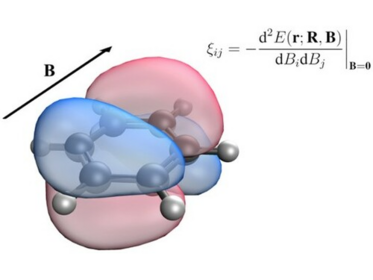
Molecular magnetisabilities computed via finite fields: assessing alternatives to MP2 and revisiting magnetic exaltations in aromatic and antiaromatic species

Tim Stauch, Brad Ganoe, Jonathan Wong, Joonho Lee, Adam Rettig, Jiashu Liang, Jie Li, Evgeny Epifanovsky, Teresa Head-Gordon & Martin Head-Gordon

Molecular Physics 119, e1990426 (2021)

Magnetic properties of molecules such as magnetisabilities represent second-order derivatives of the energy with…

find out more: Molecular magnetisabilities computed via finite fields: assessing alternatives to MP2 and revisiting magnetic exaltations in aromatic and antiaromatic species

TOC picture of the publication

Lessons from a Challenging System: Accurate Adsorption Free Energies at the Amino Acid/ZnO Interface

Monika Michaelis, Massimo Delle Piane, Dirk Rothenstein, Carole C. Perry, and Lucio Colombi Ciacchi

J. Chem. Theory Comput. 17, 4420–4434 (2021)

We undertake steps to overcome four challenges that have hindered the understanding of ZnO/biomolecule interfaces at the atomic scale: parametrization of…

find out more: Lessons from a Challenging System: Accurate Adsorption Free Energies at the Amino Acid/ZnO Interface

TOC picture of the publication

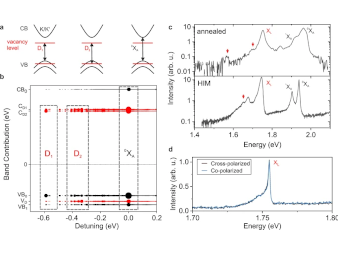
The role of chalcogen vacancies for atomic defect emission in MoS2

Elmar Mitterreiter, Bruno Schuler, Ana Micevic, Daniel Hernangómez-Pérez, Katja Barthelmi, Katherine A. Cochrane, Jonas Kiemle, Florian Sigger, Julian Klein, Edward Wong, Edward S. Barnard, Kenji Watanabe, Takashi Taniguchi, Michael Lorke, Frank Jahnke, Johnathan J. Finley, Adam M. Schwartzberg,…
find out more: The role of chalcogen vacancies for atomic defect emission in MoS2

TOC picture of the publication

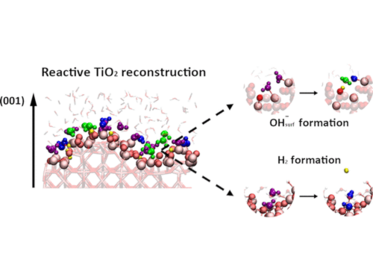
Water Reactions on Reconstructed Rutile TiO2: A Density Functional Theory/Density Functional Tight Binding Approach

Filippo Balzaretti, Verena Gupta, Lucio Colombi Ciacchi, Bálint Aradi, Thomas Frauenheim, and Susan Köppen

J. Phys. Chem. C 125, 13234–13246 (2021)

Far from being conclusively understood, the reactive interaction of water with rutile does still present a challenge to atomistic modeling techniques…

find out more: Water Reactions on Reconstructed Rutile TiO2: A Density Functional Theory/Density Functional Tight Binding Approach