

Martian Mindset Seminar
Humans living on Mars has been a longtime dream which may now appear within reach. The technological, ethical and environmental challenges are however enormous and require transdisciplinary, ground-breaking science.
The Martian Mindset is a scarcity-driven paradigm for producing enough-to-use materials and parts. By imagining engineering on Mars—with no fossil fuels, scarce water, and a thin CO₂ atmosphere—the Cluster Team rethinks production from scratch and redefines manufacturing for Earth and beyond.
Join our regular Martian Mindset Seminar to explore a sustainable Mars Exploration for the benefit of humankind and Earth.
Every 2nd Thursday at 1.15 pm,
AIB (Hochschulring 40)
Winter Term 2026/27:Starting at October 22nd
Online Participation possible, for details please see the event announcement.
The Cluster The Martian Mindset is funded by the German Science Foundation (Deutsche Forschungsgemeinschaft, DFG) from 2026 to 2032 through the Excellence Strategy of the German federal and state governments.
Upcoming Events
15. Oktober 2026−15. Oktober 2027
Past Events

The Role of Space Law: Bridging Governance, Al, Ethics, and Sustainability Beyond Earth
with Lesley Jane Smith – 11.06.2026 | 2:15 p.m.
The rapid evolution of space activities in the new Millenium, with the entry of further, non-traditional commercial space enterprises, and the increase in automated systems relying on artificial intelligence for space activities, require a comprehensive interpretation of the treaty provisions, whilst having regard to competing and divergent rules of national legislation. The five UN space treaties, and the principles they enshrine, provide the fundamental framework for the peaceful use and exploration of outer space. The challenges in formulating and implementing provisions to accommodate these developments are vast, not least given the plans for human life beyond Earth. These challenges range from international standardization, to accommodating Al within space governance and national space operations licensing regimes, insurance and risk management perspectives. These challenges are looked at during the talk from the perspective of new space operations, private sector engagement, to emerging ethical, environmental, and liability concerns.
Lesley Jane Smith, graduate of Edinburgh University and solicitor, is partner and legal advisor in Weber-Steinhaus & Smith, Bremen and Professor Emeritus of Law at Leuphana University, Lueneburg, Lower Saxony. Lesley Jane is an expert in the field of national regional and international space law and policy, collaborating with its stakeholders at industrial and agency level. With long-standing experience as legal advisor within the European space programs, largely relating to industrial contracts and procurement, she contributes to the regulatory dialogue on commercial aspects of space operations. She has extensive publications on the interface between space law and commercial operations, and is a frequent contributor to research studies relating to issues such as debris-related risk and space traffic management. Lesley Jane was appointed President of the International Institute of Space Law (IISL) in October 2025.
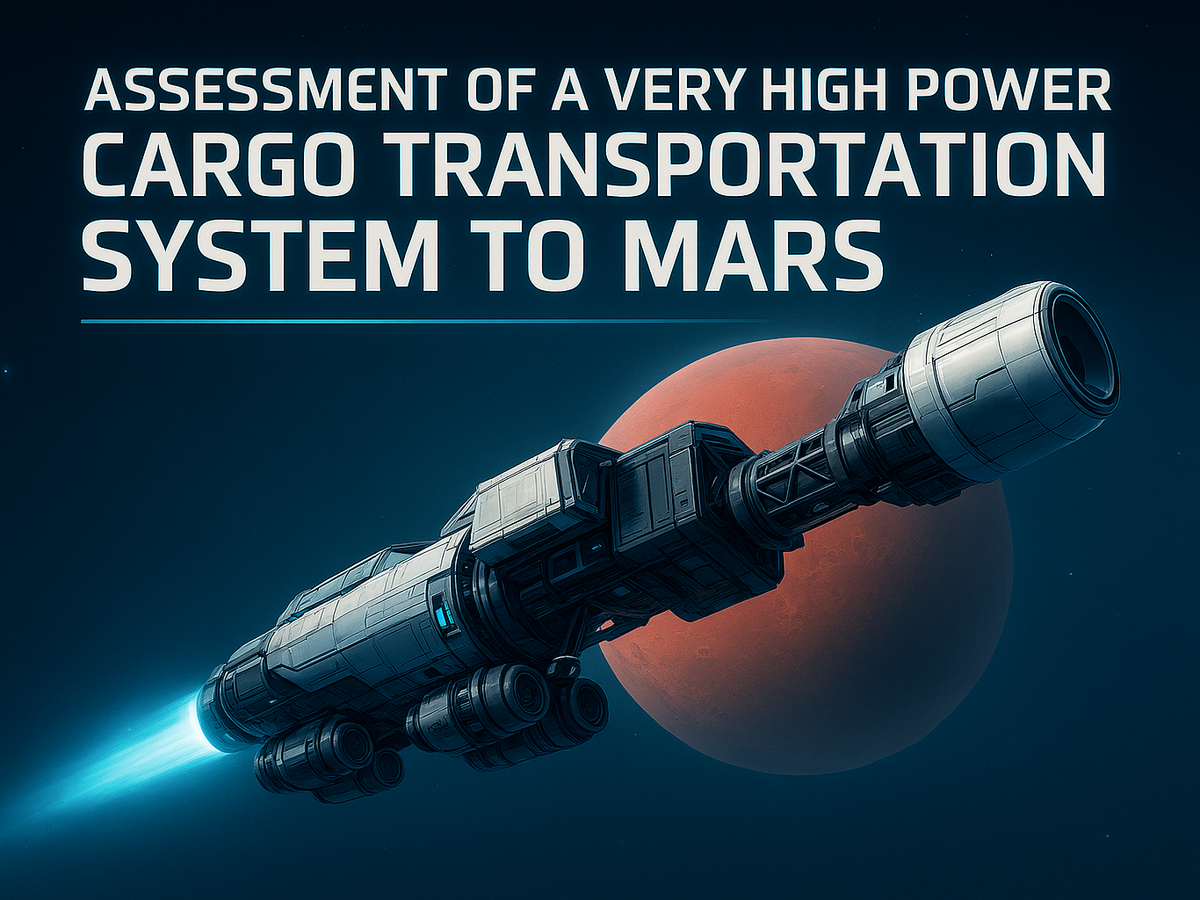
Assessment of a very high-power cargo transportation system to Mars
With Massimiliano Vasile - 28.05.2026 | 2:15 pm
What might an early design for a crewed Mars mission look like?
In this talk, Massimiliano Vasile explores the trade-offs in designing both the vehicle and the mission. The goal is a round-trip to Mars, with flexible time spent on or near the planet. The vehicle is built for at least 3 crew members and 50 tons of cargo, with options for in-orbit assembly and refuelling. The design uses a bimodal nuclear propulsion system. A multi-objective optimization analysed the balance between flight times, total mission duration, Mars stay times, planetary alignment, dry masses and engine size, as well as mission paths.
Massimiliano Vasile, is currently Professor of Space Systems Engineering and Director of the Aerospace Centre of Excellence at the University of Strathclyde (Glasgow/Scottland). He received his M.S. in 1996 and Ph.D. in 2001 from Politecnico di Milano. Prof. Vasile has developed novel numerical methods for single and multi-objective optimisation under uncertainty, has pioneered the use of computational intelligence in astrodynamics, and the use of imprecise probability theories in the optimisation of space systems. His research has been funded among others by the European Space Agency, the UK and French Space Agencies, and the European Commission.

From Mars to Earth – How the Search for Martian Life Could Reveal Our Own Origins
With Jacob Heinz - 30.04.2026 | 2.15 pm
Mars may have hosted habitable environments early in Solar System history, making it one of the most promising targets in the search for extraterrestrial life.
If life emerged early on Mars, rocks ejected from impacts may have transported microorganisms between Mars and Earth, meaning that life on both planets could share a common origin. This makes it crucial to search for Martian biosignatures before human exploration obscures the evidence and before future crewed missions face potential biological risks from related organisms. This talk explores where traces of life may still persist on Mars, with particular focus on salt-rich deposits as potential refuges for halophilic microorganisms.
After earning a Master’s degree in Chemistry from TU Freiberg, including a year abroad in Concepción, Chile, Jacob Heinz completed his Doctorate in Astrobiology at TU Berlin in 2019. Since 2020, he has conducted postdoctoral research at IGB and TU Berlin, where he led the DFG-funded BRINES project, focusing on the formation of Martian brines and their microbial habitability. Since October 2025, Jacob has served as a Postdoc at ZARM, University of Bremen, directing the EXOSALT project to investigate hypersaline environments, such as the Atacama Desert, as potential Mars-analogue habitats.

Mars and the Earthlings–The Story Continues
With Michel Viso - 16.04.2026 | 2:15 pm
Mars remains fascinating to the public, scientists, and policymakers. The planet is not too far, and the environment is harsh but manageable. With the former missions to Mars, a lot is now known about the planet. Science still has much to discover about Mars, the solar system, and also the emergence of life on Earth. Then a new competition began between the United States and China to send human explorers to its surface. There are also new claims from organisations or private persons, to establish there permanent outposts and populations. Dreams and nightmares!
After several years of practice as a veterinarian across France, Michel Viso was selected, in 1985, as a French cosmonaut by the French Space Agency. He worked on a project developed jointly by France and the United States to be embarked on space shuttle flights. The program was cancelled in 1993. Michel Viso did not fly into space. He became a programme scientist for general biology and animal physiology. In 1999, he was appointed CNES representative for planetary protection policy. Then he was named programme scientist of the Exobiology and Exoplanets programmes. In 2021 suffering from the incurable age limit disease, he retired from CNES. In 2023, he joined the European Space Science Committee.