Current Student Work / Thesis / Projects
Current student projects – this section presents the students ongoing projects.
Earables: Examining the possibilities of earables as host system for organic sensors
Bachelor Thesis
Over the past decades the average life expectancy has continuously increased. However, with this increased life expectancy the number of age-related chronic diseases also went up. For many of these illnesses regular health inspections are required. Smart wearable sensors open up new opportunities of health monitoring, possibly eliminating the need for a prolonged hospital stay for monitoring purposes in some cases. Even though wearable sensors are not perfect, the measurements which they can take are surface level data as the sensors inside gather mostly data from the skin and most of them do not have a main purpose which makes them dispensable.
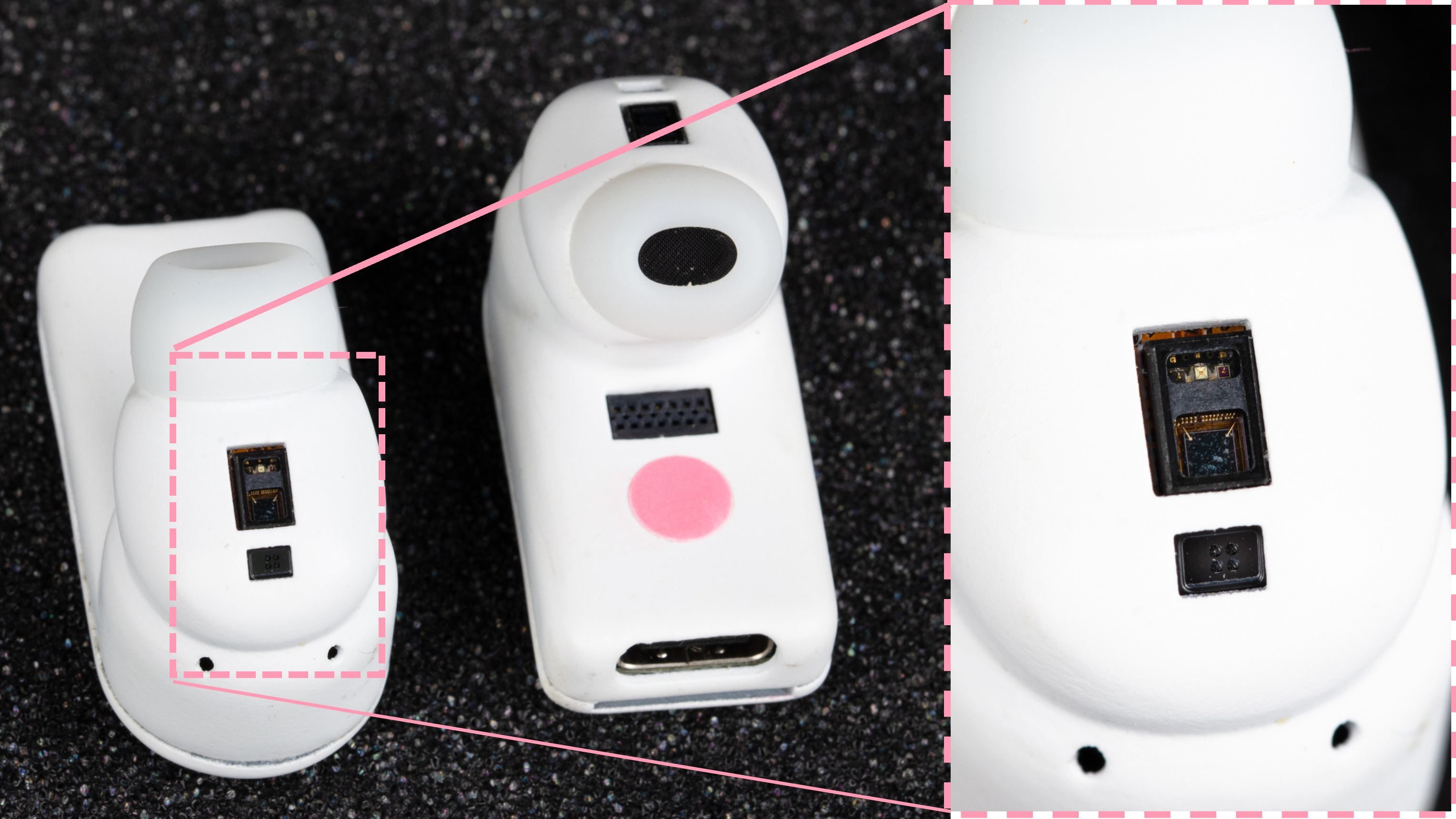
Even though there are many advantages in constantly monitoring certain health parameters, wearables made with sensors as their main purpose are, sooner or later, when the initial enthusiasm wears off, dispensable. The Earables 2.0 from OpenEarables seem to be a promising host platform for wearable sensors as they provide a near indispensable main use by being a hearing aid. With this main purpose they provide all necessary requirements to support the usage of wearable sensors, by being worn close to the skin, already needing a battery to power them and having the possibility for wireless monitoring of the data received.
This study focuses on the capabilities and accuracy of the various sensors already built into the Earables 2.0 in a variety of ways. In addition, a simple silicone attachment for later Organic Electrochemical Transistor (OECT) sensor integration will be developed and fabricated which can be used for future projects surrounding the Earables 2.0 Platform.
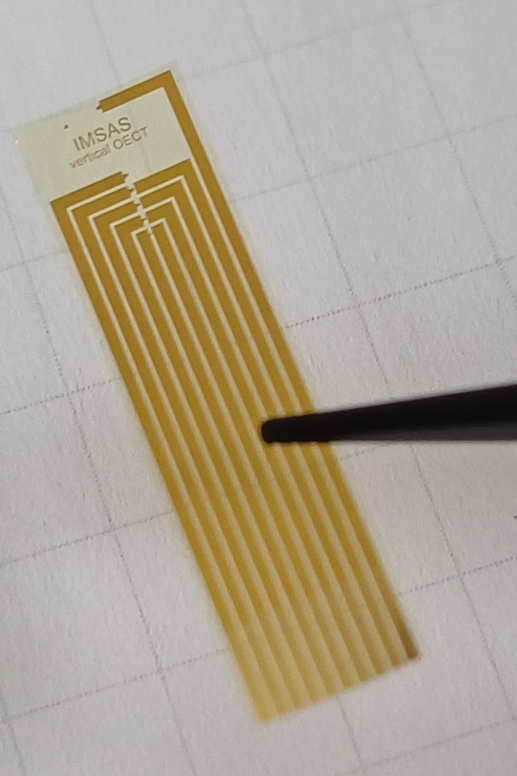
Investigation and Development of Flexible and Stretchable Vertical Organic Electrochemical Transistors Using Polyimide
Master thesis project
Abstract:
Organic electrochemical transistors (OECT) have recently gained widespread attention in the field of bioelectronics because of their biocompatibility and high transconductance. OECTs provide a powerful solution to detect significantly weak biomedical signals with their high amplification capabilities.
In this study, we are developing a flexible and stretchable vertical OECT. By adopting vertical geometry, there is a decrease in device footprint and a significant increase in transconductance compared to conventional planar OECTs, which is the key to the precise detection of small bio signals. However, to integrate vertical OECT into wearable bioelectronics, flexibility and stretchability of the device are the key factors to consider. Flexibility will allow the device to bend around irregular surfaces (e.g., skin or organs) without losing function. Stretchability will ensure stable device performance under mechanical strain or motion.
By implementing various fabrication and design strategies, this work enhances both mechanical compliance and electrical stability of vertical OECT under deformation.
This research is expected to establish a basis for flexible and stretchable vertical OECT and facilitate successful integration to wearable bioelectronics devices.