

DSC-2026-07 | From Data to Map: Geospatial Foundations and Visualization in Python
Wann?
19. & 20. Mai 2026
9:30 - 16:00 Uhr
Wo?
Campus
MZH | Raum 4290
Trainer*innen
Sarah Büker
Annika Nolte
Data Science Center, Universität Bremen
Anzahl Teilnehmende: Max. 20
Sprache: Englisch
Kalendereintrag:
t3://file?uid=200836
Why is the topic important?
Researchers benefit from data visualization on maps whenever their data is spatial by nature or can be linked to places. This applies across many fields – from environmental observations and simulations, biodiversity records, and public health indicators to mobility data, survey results, and historical sources with geographic references. Maps help provide spatial context, reveal patterns, support interpretation, and make key findings easier to understand for diverse audiences.
Python has become a widely used tool for scientific visualization because it enables reproducible, end-to-end workflows from data access and preprocessing to plotting and sharing results. Its geospatial and visualization libraries make it possible to create both publication-ready static maps and interactive maps for exploration, while keeping all steps transparent and reusable.
Workshop Goal
This two-day workshop equips participants with practical skills to create reproducible map-based visualizations in Python using Jupyter notebooks. Participants will gain a working understanding of core geospatial data and map concepts such as vector and raster data, coordinate reference systems, projections, and map layouts, and learn how these affect visualization results and interpretation. They will practice creating, loading, and preparing geospatial datasets and will produce static maps and simple interactive maps. While the workshop focuses on geospatial data and maps, the Python libraries and workflows introduced are also broadly applicable to general data visualization techniques in Python.
Workshop Content
DAY 1:
- The impact of data visualization in science and science communication.
- Geospatial data foundations: vector vs raster data, CRS and projections, and common pitfalls.
- Guided hands-on exercises on static maps and figures, including loading geospatial data, basic preprocessing (filtering, linking tabular data to spatial layers, reprojection), and Python visualization essentials (color scales, legends, annotation), as well as map layout and export settings.
DAY 2:
- Guided hands-on exercises on static maps and figures – continued.
- Brief input: what makes plots interactive and when to use interactive maps.
- Guided hands-on exercises on interactive maps for exploration, including layers, hover information, and popups
Target Audience & Prior Knowledge
Researchers from all disciplines interested in geospatial or place-linked data are welcome. Basic programming experience (ideally Python) is helpful, but motivated participants without prior coding experience can follow along using guided Jupyter notebooks and prepared examples. For participants who want to build up Python basics, we also offer a Python beginners workshop, and the corresponding self-study materials will be published on GitHub after the workshop (https://github.com/Data-Science-Center-UB/Python-Introduction-for-Researchers).
Technical Requirements
- Own laptop and connection to the Wifi (e.g. via eduroam).
- Please make sure you have access to the Jupyter4NFDI.
About the Trainers
Annika Nolte and Sarah Büker are data scientists for training and consulting at the DSC.

As a DSC data scientist and environmental scientist, Annika Nolte supports researchers with their data management and analysis workflows. In training and consulting, Annika draws on broad expertise in Earth system sciences and extensive experience in scientific programming. Her main focus areas are data standardization, data management, statistical methods, geospatial analysis, and machine learning in environmental and marine sciences.
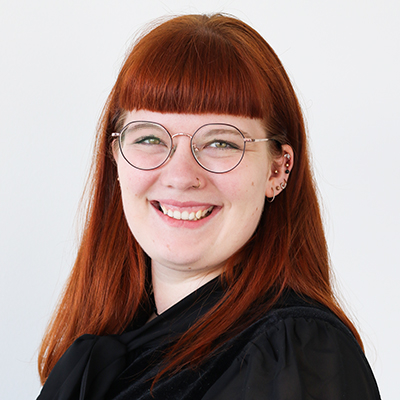
Sarah Büker works as a Data Scientist at the Data Science Center (University of Bremen). She holds a Bachelor’s degree in Biological Sciences from the University of Osnabrück and a Master’s degree in Marine Environmental Sciences from the University of Oldenburg. In her work, she specializes in bioinformatics, scientific programming, and accessible data management and standardization in quantitative research.