Welcome to the Research Group Resilient Energy Systems

  • Information about the Research Group for Resilient Energy Systems

The research conducted by the Resilient Energy Systems research group focuses on examining and supporting transformation processes in the future energy system.

One key focus is on the concept of transformative resilience - the ability to use profound changes or disruptive events in the energy system as an opportunity to shape sustainable and robust structures. In this context, we develop approaches to create less vulnerable systems - not only as a reaction to such disruptions but also proactively through early strategic planning. Another main area of our work is data-driven analysis of sociotechnical vulnerabilities and risks, as well as model-based foresight of future scenarios for urban and industrial infrastructures.

We develop tools for energy system modeling and optimization, as well as digital planning tools, to simulate the impact of various measures on resilience and sustainability in the energy system. Together with transformation actors beyond research, we create well-founded decision-making bases for the complex transformation of the energy system. With the help of urban twins, we provide promising starting points to capture complex interconnections and support transformation actors in intricate decision-making processes.

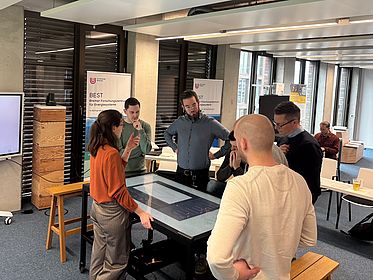
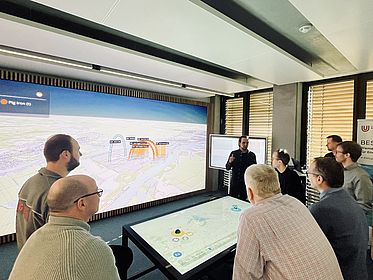
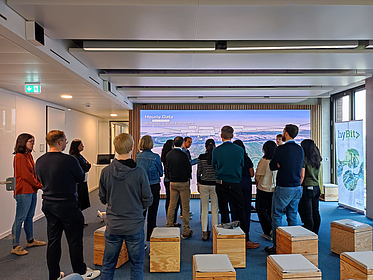
The Virtual Transformation Lab (VTL) offers an environment where these topics can be collaboratively shaped with different stakeholder groups. The VTL provides both traditional analog and digital interactive tools (LED wall & touch tables) to optimally support different phases of transformation processes. As part of the Digital Hub Industry in the NEOS building at the University of Bremen's Technology Park, the department is optimally networked with research and industry partners. Additionally, the group is part of the Bremen Research Center for Energy Systems "Energy for Economy and Society" (BEST).
Members of this research group come from mechanical engineering, process engineering, biology, physics, and social sciences; they collaborate in interdisciplinary and transdisciplinary projects.

News


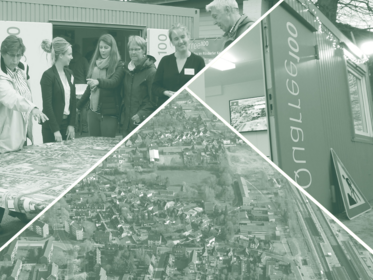
Images of Quarree100

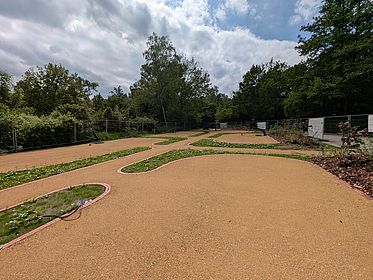
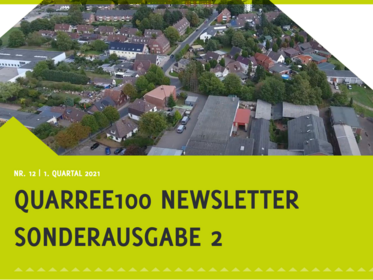
Publication of a results brochure of the QUARREE100 project for interested parties in and around the Rüsdorfer Kamp neighborhood in Heide

Within project QUARREE100, a results brochure was published to provide information for residents of the Rüsdorfer Kamp neighborhood in Heide, Schleswig Holstein and interested parties.

find out more: Publication of a results brochure of the QUARREE100 project for interested parties in and around the Rüsdorfer Kamp neighborhood in Heide

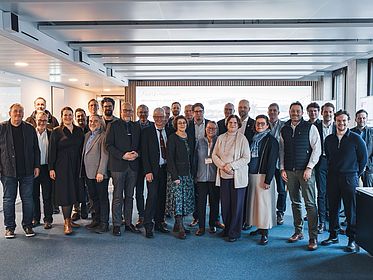
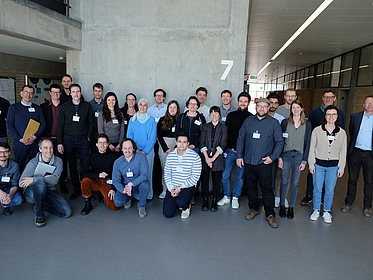
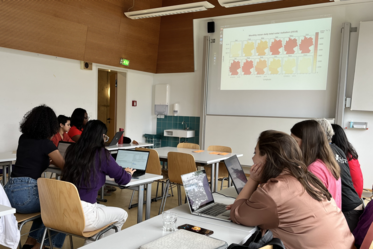
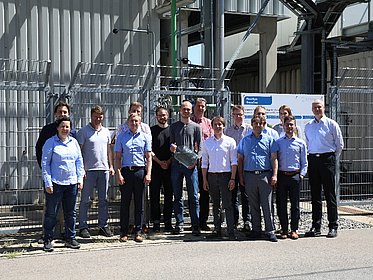
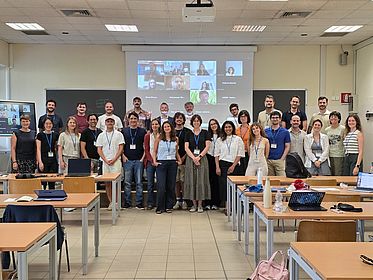
The participants of the workshop "Use of digital, simulation-based tools in stakeholder processes of urban (infrastructure) planning" on February 29, 2024 at the University of Stuttgart

Participation in the expert workshop at the University of Stuttgart: "Use of digital, simulation-based tools in stakeholder processes of urban (infrastructure) planning"

How is a target group-oriented design of tools for urban (infrastructure) planning achieved? On February 29, 2024, ZIRIUS invited scientists from around 20 research projects from Germany, Austria and Switzerland

find out more: Participation in the expert workshop at the University of Stuttgart: "Use of digital, simulation-based tools in stakeholder processes of urban (infrastructure) planning"

Kickoff of the Large-Scale hyBit Hydrogen Research Project

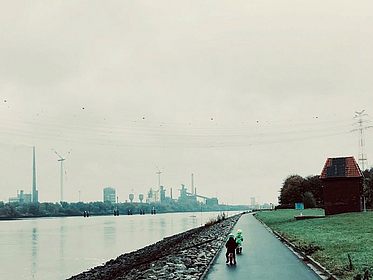
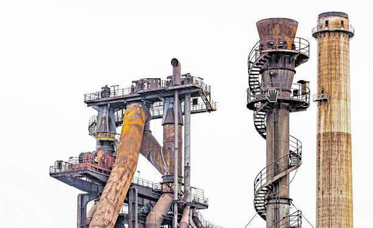
“Hydrogen for Bremen’s industrial transformation” – or hyBit for short – is the name of the important large-scale hydrogen research project coordinated by the University of Bremen. The project will now kick off on November 15–17, 2022. The Bremen steelworks will also be visited.

find out more: Kickoff of the Large-Scale hyBit Hydrogen Research Project

hyBit: New Large-Scale Hydrogen Research Project Launched in Bremen

Hydrogen is seen as the “energy carrier of tomorrow.” But the path to an efficient hydrogen economy is complex and requires excellent scientific research. The large-scale hyBit hydrogen research project coordinated by the university is receiving almost 30 million euros in funding for the purpose.

find out more: hyBit: New Large-Scale Hydrogen Research Project Launched in Bremen

Final Meeting of the first Project Phase

Am 14. und 15. Juni 2022 fand an der Technischen Universität Bergakademie Freiberg das Abschlusstreffen von Phase 1 des Projektes KEROSyN100 statt. Neben spannenden Vorträgen bot die gelungene Veranstaltung ausreichend Raum für Diskussionen und geselligen Austausch. Aufbauend auf den…

find out more: Final Meeting of the first Project Phase

Newsletter No. 12 | 2nd Quarter 2021

This newsletter gives insight to the research of the Department for Infrastructure and Systems (AB3) which is part of the Advanced Energy Systems Institure (AES) of the University of Bremen.

find out more: Newsletter No. 12 | 2nd Quarter 2021

Der Bremer Industriehafen könnte Dreh-und Angelpunkt einer grünen Wasserstoffwirtschaft werden.

Transformation of the Hydrogen Industry: Development of an Interactive Platform for Stakeholders in the Industry

Presentation of the project HyTracks in the Online-Magazine FONA by the German Ministry of Education an Research. Using the industrial Ports of Bremen as a model, the project hyTracks develops transformation knowledge to create a regional hydrogen-industy.

find out more: Transformation of the Hydrogen Industry: Development of an Interactive Platform for Stakeholders in the Industry

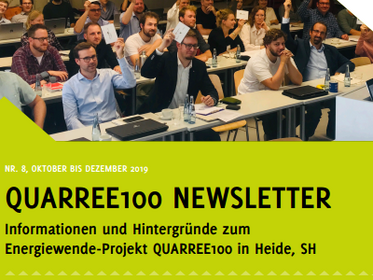
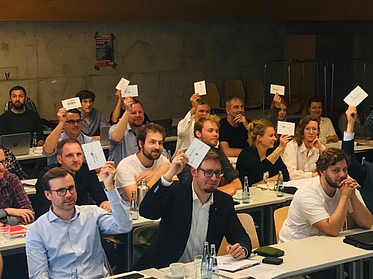
Die Partner von QUARREE100 bei der Abstimmung über das Energiekonzept für das Stadtquartier „Rüsdorfer Kamp“

QUARREE100 adopts energy concept

On Thursday, September 12, the QUAREE100 joint project decided on the energy concept, which forms the basis for the upcoming planning for the constructional implementation in the existing quarter "Rüsdorfer Kamp".

find out more: QUARREE100 adopts energy concept

Our Partners

hyBit consortium partners


Partners Wärmewende Nordwest


Further Partners of our Department