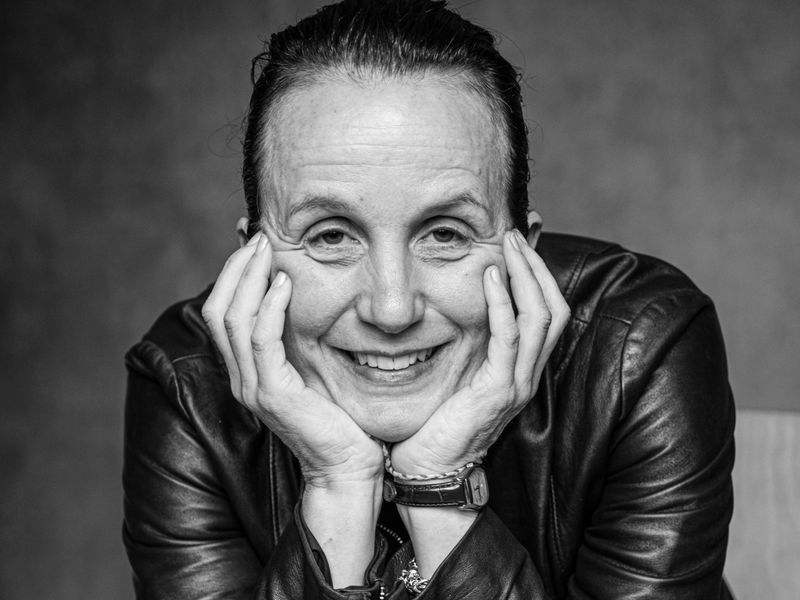
“The most important reason is that I want to do it – and that I am convinced I can”, says Prof. Doff with a smile. She has been the new dean of Faculty 10 since October. With a wealth of experience, energy, and a clear vision, she wants to strengthen the faculty of linguistics and literary studies – and bring people together in the process.
For Prof. Doff, the appointment as dean comes at the right time. “The faculty is in a phase where a lot of shaping is possible,” she says. After a series of new appointments, Prof. Doff feels that Faculty 10 is diverse – with many new colleagues and a core of existing professorships. The perfect conditions for “continuing what has proven successful and developing new things together.” She also wants to seek exchange beyond the boundaries of the department – for example, with other faculties or as part of the joint application with Oldenburg in the “Northwest Alliance” cluster of excellence. “I am very keen to promote Faculty 10 throughout the university,” she emphasizes.
A path between school, research, and responsibility
Her path into academia began with a master's degree in English, German, and philosophy, combined with teacher training. Prof. Doff's affinity for languages motivated her to study the subject, and teacher training was added as a safe option – “And in retrospect, that turned out to be a real stroke of luck for me.” After positions at LMU Munich (doctorate and habilitation in English) and Goethe University Frankfurt am Main (first appointment to the professorship for language teaching and learning research), she became professor of foreign language didactics at the University of Bremen. “I was the first in my family to go to university,” she says. She was influenced by encounters with people who took on responsibility and opened up new perspectives. Her doctoral supervisor in particular was a role model: “I saw that it is possible to combine an academic career, family, and leadership responsibility.”
One of her central themes is educational equity—a field she discovered through her work at the Center for Teacher Education and Educational Research. “More than half of all fourth graders in Bremen do not meet the minimum standards in reading, writing, and arithmetic,” she says. “In my view, language is the key to this.” This insight led to a large-scale transfer project in which she collaborated with the Group for Design and the Bilderinstitut Berlin to develop an exhibition and workshop concepts based on a study she conducted in cooperation with 12 schools in Bremen and Bremerhaven, which was published by Julius Klinkhardt Verlag in 2025. “I realized that the topic needs resonance – even beyond academic circles.”
Together instead of side by side
She also wants to carry this idea forward in the faculty. She values dialogue, transparency, and joint action: “I want to focus interest on what connects the people in Faculty 10 and where they can make a difference together.” This includes, among other things, the development lines defined at last year's closed-door meeting, which Prof. Doff sees as common focal points. These development lines include, for example, strengthening multilingualism, promoting internationalization, and securing teacher training. Her goal is to bundle these potentials and strengthen cohesion within the department. “I believe that the department can gain a lot internally by looking at each other and learning from each other,” she says. Strengthening common perspectives and contributing individual strengths to the common good – “an aspect that I definitely want to support as dean.”
Making women in science visible
Another issue close to her heart is the visibility of women in science. Together with the women's representatives, she would like to bring the exhibition “Versäumte Bilder” (Missed Images) to Bremen next year. The project by Berlin photographer Gesine Born uses AI to generate portraits of female scientists who have made significant contributions but remain underrepresented to this day. Prof. Doff plans to expand the project to include female scientists from Bremen: “As dean, I would like to contribute to making the role of women in science more visible.” She is also planning a lecture series on the role of female scientists at the University of Bremen.
When asked what she is most looking forward to in her new role, she answers without hesitation. “The collaboration. Seeing how a group comes together and organizes itself, and working together to strengthen the role of the faculty.” With her combination of experience, openness, and creativity, Prof. Doff brings a breath of fresh air to Faculty 10—and a clear message: development is most successful when achieved together.