

Wearable Organic Electronics
Wearable Organic Electronics
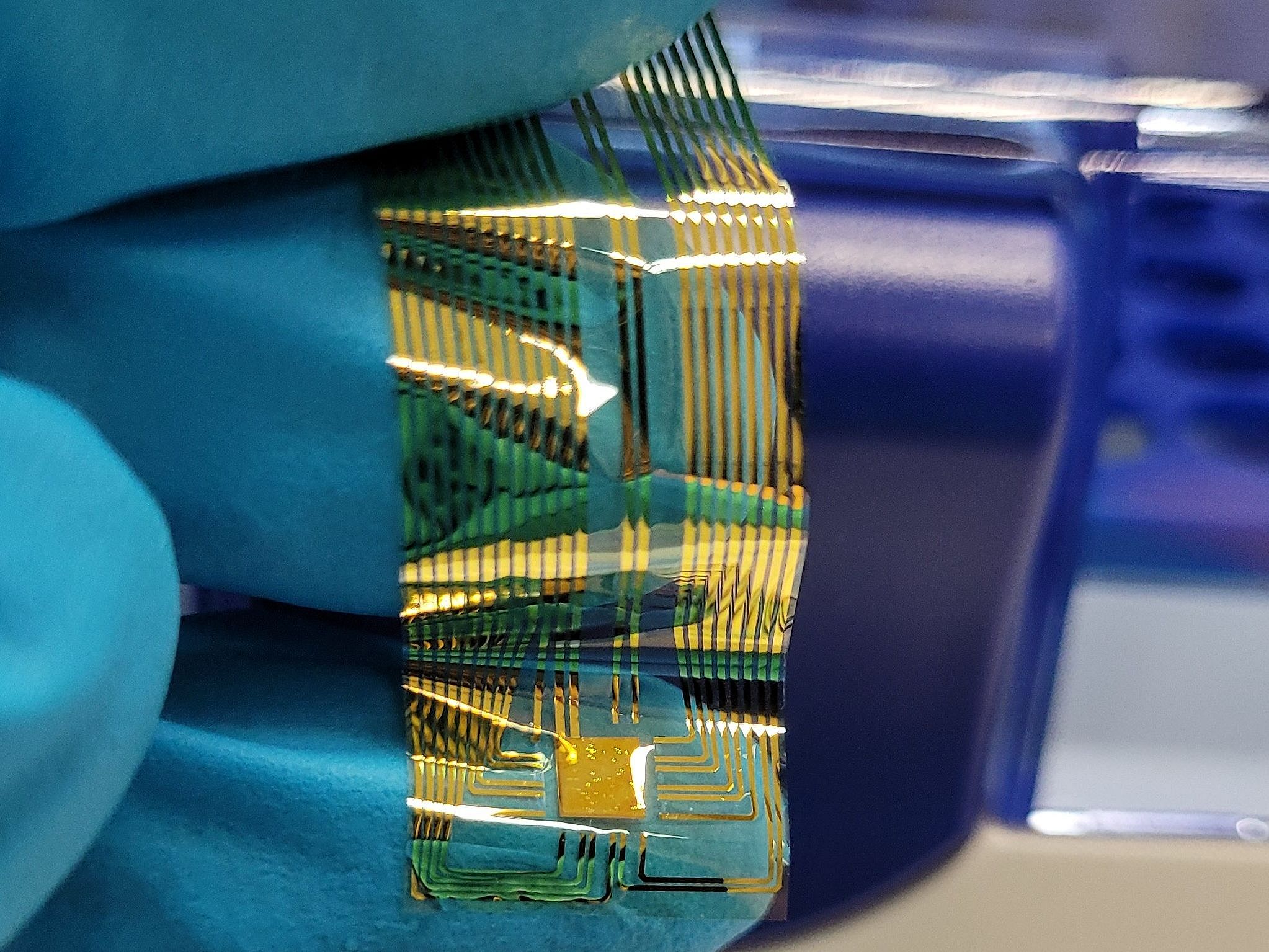
Wearable devices are already well known in form of e.g. smart watches, monitoring steps per day, heart rate and even monitor sleep quality. Traditional silicon-based electronics have driven decades of innovation, everything from smartphones to satellites. However, silicon comes with a fundamental limitation: rigidity. Even when made as thin as possible, silicon chips remain brittle, limiting their application for the dynamic surfaces of our bodies. In contrast, organic electronic materials can offer an alternative. They are lightweight, mechanically flexible, and even stretchable, opening the door to devices that integrate naturally with clothing, skin, and movement.
Organic electronics can be printed on flexible substrates using low-cost techniques such as roll-to-roll- or screen printing, production becomes more scalable and sustainable. This not only reduces environmental impact but also allows for larger-area devices like flexible displays, electronic skins, and energy-harvesting surfaces. Because organic materials are inherently compatible with soft, breathable polymers, they can be made biocompatible, one additional advantage for long-term wear monitoring patches.
Organic electrochemical transistors (OECTs) fit perfectly into this concept as they represent a unique interface between ion-based signals in our bodies and electron-based signal transfer in electronics. Using OECTs as sensors in wearable devices will enable new possibilities of health monitoring and can help implementing early warning systems for e.g. preliminary stages of age-related chronic diseases.
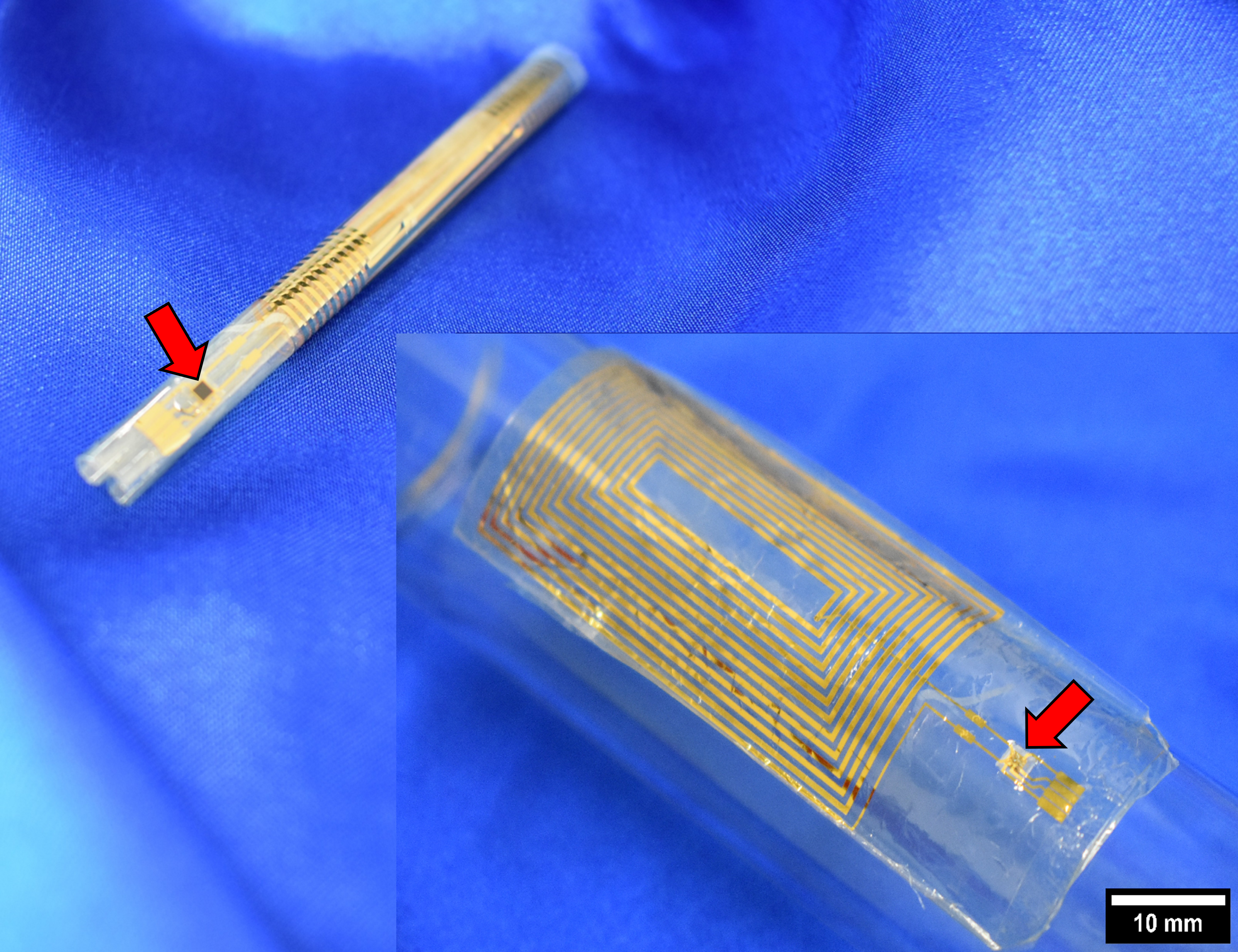
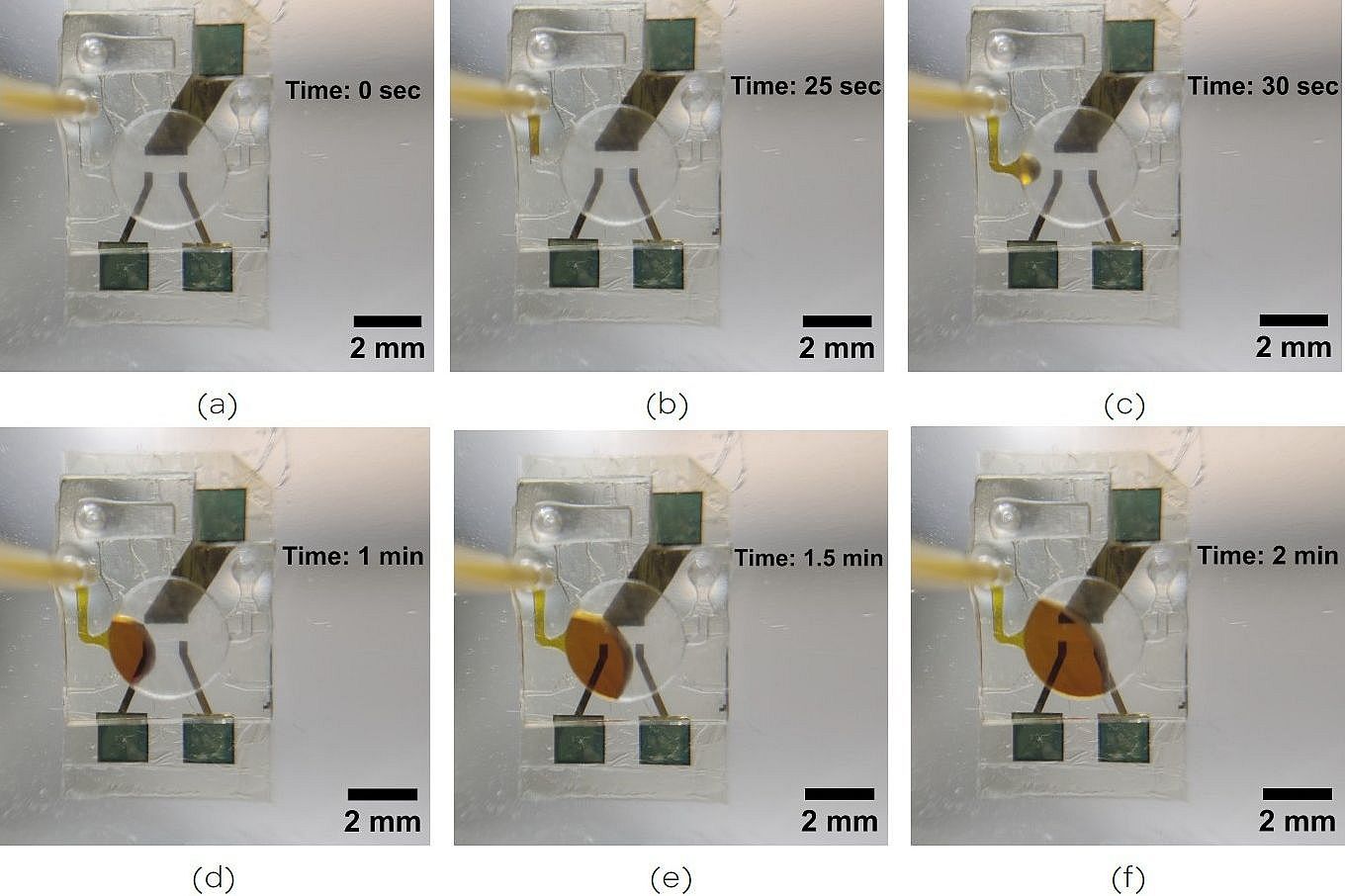
Our work focuses on the development of new approaches for wearable electronics using OECT sensors. One example is the hybrid-integration approaches with wireless silicon-based electronics to use the advantages of silicon-based technology for high-speed communication interfaces. Another approach is the combination of OECTs with microfluidics to collect the analyte (e.g. sweat), directly leading it to the sensor. In addition to this, multi-layer, adaptable contacting strategies and thin, flexible OECTs on polyimide foil are some more examples of ongoing projects in this direction.