

Electrochemical CO2 reduction through NADH regeneration
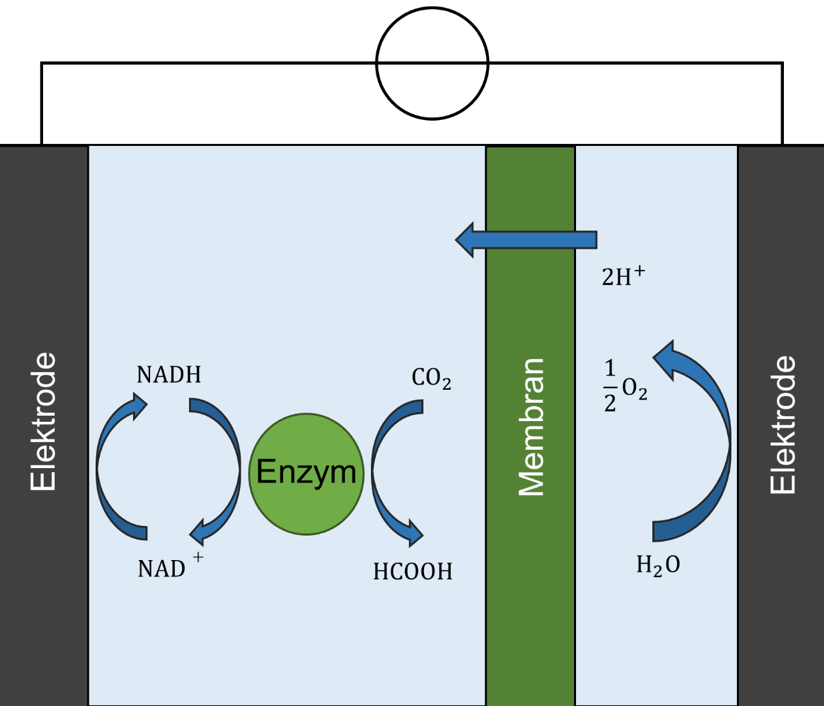
Reducing greenhouse gas emissions plays a crucial role in combating climate change. Many technologies are focused on replacing processes that release greenhouse gases such as carbon dioxide with climate-neutral alternatives. In addition to replacing climate-damaging technologies, storing or converting carbon dioxide from the atmosphere or from exhaust gases can also counteract the anthropogenic greenhouse effect.
Current methods for CO2 storage or conversion are generally only short-term solutions, exhibit poor product selectivity, or are difficult to control because they require high pressures or temperatures.
In contrast, enzymatically catalyzed reactions are very easy to control because they can take place at atmospheric pressure and room temperature, and each enzyme catalyzes a specific reaction pathway, so that the reaction products are clearly defined. During the enzymatic conversion of CO2, the enzymes consume the cofactor NADH, which acts as an energy source for the reaction. The aim is to create a circular process in which enzymes convert CO2 into high-value chemicals (such as formate and methanol). The consumed cofactor NADH is regenerated electrochemically at an electrode. This requires only low voltages, and the cofactor regeneration can be powered by renewable energy sources, for example.
Relevant publications in this field
Meyer, J., Romero, M., Thöming, J., Baune, M., Reimer, N., Dringen, R., & Bösing, I. (2023). Experimental insights into electrocatalytic [Cp* Rh (bpy) Cl]+ mediated NADH regeneration. Scientific Reports, 13(1), 22394.
https://doi.org/10.1038/s41598-023-49021-4
Aamer, E., Thöming, J., Baune, M., Reimer, N., Dringen, R., Romero, M., & Bösing, I. (2022). Influence of electrode potential, pH and NAD+ concentration on the electrochemical NADH regeneration. Scientific Reports, 12(1), 1-9.
Contact
M. Sc. Jonas Meyer
Room UFT 2110
Tel. 0421 218 63495
jomeyerprotect me ?!uni-bremenprotect me ?!.de