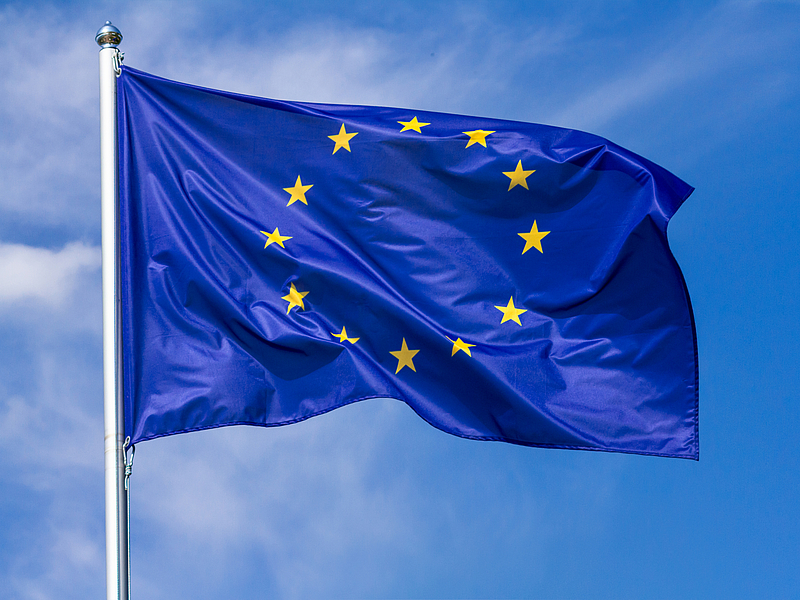


Currently, 41 university alliances are being funded across Europe as part of the EU's European Universities Initiative (EUI). Thirty-five German universities and higher education institutions are involved in these. A significant number. In order to strengthen the European universities in the long term, the German universities and higher education institutions have now issued the following statement in English to the EU:
Statement of German Universities and Higher Education Institutions Represented in Existing European University Alliances on the Full Roll-out of the European Universities Initiative – August 2021:
Coming together as European Universities to combine the strengths and diversity of European research, innovation, education and transfer into new structures to meet the challenges faced by Europe and the world today is the core idea of the European Universities Initiative (EUI). We – 35 German universities and higher education institutions that have joined forces in European University Alliances – strongly support the principles and values reflected by the EUI and the positive transformation processes towards long-term, intensive cross-institutional partnerships it facilitates. We would like to thank the Commission for the fruitful co-creation process that has been initiated to design the conditions for and criteria of the full roll-out of the European Universities Initiative. We continue to be highly committed, reliable, and constructive partners in this collaborative effort.
The attention the EUI has received since its launch is truly remarkable. With co-creative enthusiasm, all of us within our alliances have been investing time, energy, and other resources, and gathered outstanding people to implement this particular kind of transnational cooperation. It is no longer a project, but an unprecedented realization of our individual, highly ambitious missions and visions. Our efforts are based on:
- European values, academic freedom and trustworthy science and education as a basis for democracy and democratic action;
- The principles of excellence, inclusion, and diversity for building a new model of higher education institutions, as well as mutual respect and the recognition of the equal dignity of human beings to realize true international cooperation;
- Our responsibility as creators of knowledge, research, education and innovation for the people of Europe, the next generation and the planet, to address the complexities and dynamics of this digital, global and highly contested world, and to develop the future competence profiles needed, also by combining the local and the global, to impact on all performance areas of the knowledge square;
- Our striving for transformation, resilience and for sustainable and equitable development: we are ready to take the future into our hands, responsibly and with ethos, and to help create the digital and green transitions. The catastrophic flooding in Germany,
Belgium and the Netherlands as well as ravaging wildfires in Southern Europe and the world, for example, serve as powerful reminders that the time to act is now. This action requires European cohesion, a cohesion that allows us to fight misinformation and fake news, to actively shape the future by co-creating the education and training of the next generation and to generate new knowledge to find solutions to the challenges of our time.
In short, we are in the process of turning President Macron’s idea into a reality. This requires deep commitment. We are convinced that these efforts are crucial for Europe. We are in awe of the outstanding students’ engagement within this process, and we appreciate the highly relevant involvement of our associate partners and representatives of our regions.
We, as 35 German universities and higher education institutions that have joined forces in European University Alliances, take on our responsibility but also see the need to address a number of issues.
Diversity
The diversity of the alliances is their potential for realizing the EUI mission and for guaranteeing that relevant, impactful and trustworthy research, education, innovation and transfer are being created. European diversity provides insight into different approaches, the chance to create new synergies and opportunities to learn from each other in transnational teams. Diversified alliances are the key to innovation and are a unique source for a dynamic and successful transformation of the European Higher Education Area. For this purpose, it is crucial to create an environment for risk, experiment and flexibility. Ample room for trial, error and creativity should be a prerequisite – thereby enabling European Universities to test the full range of their ideas and unleash their potential.
In order to maintain and further promote this diversity, which is one of our core strengths, the EUI must allow for gradual enlargement or other forms of cooperation than full partnerships, e.g., between universities inside and outside the alliances. Criteria for expansion and funding cannot rely on geography, the size of the alliance or the membership to political landscaping categories alone. They must be mission- and quality-driven, and selected by each individual alliance according to its self-concept and vision. This also implies that the EUI should be open to excellent higher education institutions from partner countries beyond the Erasmus sphere, regardless of type and size. Especially institutions from Switzerland, Great Britain and Israel – the EU’s closest partners – reinforce Europe’s excellence dimension, ensuring global scale, visibility and impact of our efforts.
Holistic Approach
Based on a modern and bridging re-interpretation of the Humboldtian idea of the freedom and unity of education and research, we advocate that the European University Alliances take a holistic approach, which similarly caters to all dimensions of the knowledge square and which is clearly transformative. To this end, it is crucial that the Directorates-General for Education, Youth, Sport, and Culture, and for Research and Innovation work together to align vision, scope and timing and merge funding schemes such as Erasmus+, Horizon Europe and innovation as well as talent and mobility programs.
Evaluation
We would like to suggest that European University Alliances are evaluated according to criteria that are both quantitative and qualitative. These criteria must address the principles mentioned above, i.e. excellence, inclusion and diversity. We propose a threefold model which is compatible with the aspiration to implement different forms of European Universities:
a) a number of fixed criteria for all,
b) a list of criteria from which each alliance can choose, and
c) mission-driven criteria set up by each individual alliance.
Communication and Timeline
We also call for a transparent and timely communication on the key evaluation modalities and criteria of the Erasmus+ and (hopefully) Horizon Europe calls 2022 and 2023 in order to be able to prepare well for the full roll-out. With the purpose of allowing for time and flexibility to realize our missions – this includes being able to keep the outstanding personnel we have recruited –, we need to keep reporting and application processes streamlined and meaningful for future development. The alliances need all their capacity to concentrate on their creative work.
Sustainability and Resources
A long-term perspective – also in terms of appropriate resources – must be ensured, because European University Networks are here to stay. Institutional funding, ideally from only one perhaps newly created EU source or program, and structures and procedures to facilitate the transition from projects to sustainable organizations must therefore be established. Against this background, we suggest considering whether the Horizon 2020 lump sum scheme for our consortia can be a model for the Erasmus+ funding as well. Reiterative project funding will drain forces and bind energy to the recurrent application and reporting process rather than the development of European Universities as lighthouses and sustainable actors in European Higher Education, research, innovation and interaction with society.
We look forward to seeing our suggestions inform the further co-creation process and would welcome if the issues raised were used for a more detailed discussion.
European University Alliances with Participation of German Universities and Higher Education Institutions:
- Brandenburg University of Technology Cottbus-Senftenberg: EUNICE – European University for Customised Education
- Kiel University: European University of the Seas (SEA-EU)
- Darmstadt University of Applied Sciences: Eut – European University of Technology
- Dresden Academy of Fine Arts: EU4ART – Alliance for Common Fine Arts Curriculum
- Eberhard Karl University of Tübingen: CIVIS – A European Civic University
- Freie Universität Berlin: Una Europa
- Friedrich-Alexander University Erlangen-Nürnberg: EELISA – European Engineering Learning Innovation and Science Alliance
- Friedrich Schiller University Jena: EC2U – European Campus of City-Universities
- Georg August University of Göttingen: ENLIGHT – European University Network to promote Equitable Quality of Life, Sustainability, and Global Engagement through Higher Education Transformation
- Hamburg University of Technology: European Consortium of Innovative Universities (ECIU)
- Heidelberg University: 4EU+ European University Alliance
- Heinrich Heine University Düsseldorf: UNIVERSEH – European Space University of Earth and Humanity
- Hertie School: CIVICA – The European University of Social Sciences
- Humboldt Universität zu Berlin: Circle U. European University
- Johannes Gutenberg University Mainz: FORTHEM – Fostering Outreach within European Regions, Transnational Higher Education and Mobility
- Karlsruhe Institute of Technology (KIT): EPICUR – European Partnership for an Innovative Campus Unifying Regions
- Leipzig University: Arqus European University Alliance
- Ludwig Maximilian University of Munich: The European University Alliance for Global Health (EUGLOH)
- Mittweida University of Applied Sciences: EURECA-PRO – The European University Alliance on Responsible Consumption and Production
- Rhenish Friedrich Wilhelm University of Bonn: NeurotechEU – European University of Brain and Technology
- Ruhr University Bochum: UNIC – The European University of Post-Industrial Cities
- RWTH Aachen University: ENHANCE – European Universities of Technology Alliance
- Saarland University: Transform4Europe – T4E: The European University for Knowledge Entrepreneurs
- Technische Universität Berlin: ENHANCE – European Universities of Technology Alliance
- Technische Universität Darmstadt: Unite! University Network for Innovation, Technology and Engineering
- Technical University of Munich: EuroTeQ Engineering University
- TU Bergakademie Freiberg: EURECA-PRO – The European University Alliance on Responsible Consumption and Production
- University of Bremen: YUFE – Young Universities for the Future of Europe
- University of Cologne: EUniWell – European University for Well-Being
- University of Duisburg-Essen: Aurora Alliance
- University of Freiburg: EPICUR – European Partnership for an Innovative Campus Unifying Regions
- University of Konstanz: ERUA – European Reform University Alliance
- University of Mannheim: ENGAGE.EU – The European University engaged in societal change
- University of Potsdam: EDUC – European Digital UniverCity
- University of Siegen: ATHENA – Advanced Technology Higher Education Network Alliance
Contact:
Prof. Dr. Beatrix Busse
Chief Development Officer European University for Well-being (EUniWell)
Vice Rector for Teaching and Studies
University of Cologne
e-Mail: beatrix.busseprotect me ?!uni-koelnprotect me ?!.de
Prof. Dr. Eva-Maria Feichtner
YUFE – Young Universities for the Future of Europe
Vice-President International and Diversity
University of Bremen
e-mail: kon3protect me ?!vw.uni-bremenprotect me ?!.de
Dr. Yoan Vilain
Circle U. European University
President’s Representative for European and International Affairs
Humboldt-Universität zu Berlin
e-mail: yoan.vilainprotect me ?!hu-berlinprotect me ?!.de
More Information:
Learn more about the YUFE Allianz where the University of Bremen is part of:
www.uni-bremen.de/yufe