Community Outreach

The University of Bremen is closely linked to the social development of the state. It draws inspiration from society and offers a wide range of science communication formats that promote dialogue between the academic community and the public. Through cooperation with educational and cultural institutions, civil society organizations, and political bodies, the university develops programs tailored to specific target groups to provide different segments of society with insights into scientific topics and methodologies and to spark enthusiasm for research. At venues such as the Kassenhalle in the Uni-Forum am Domshof or the Haus der Wissenschaft, scientific topics can be explored further in collaboration with the public. In transdisciplinary and participatory research projects such as Citizen Science, researchers actively involve members of the public in the research process. This fosters a vibrant exchange between science and society.


Creating Knowledge Together

Transdisciplinarity & Participation in Research and Teaching

The major challenges of our time—from climate change to digitalization to social change—can only be overcome by working together. That is why the University of Bremen is committed to transdisciplinarity and participation: here, research emerges from a co-creative exchange between academia, professional practice, and society. Diverse perspectives, experiences, and forms of knowledge converge to develop sustainable, practical solutions. This collaborative approach not only enhances the quality and relevance of research but also strengthens trust in science—and helps actively shape societal transformation.
Citizen Science

Citizen Science

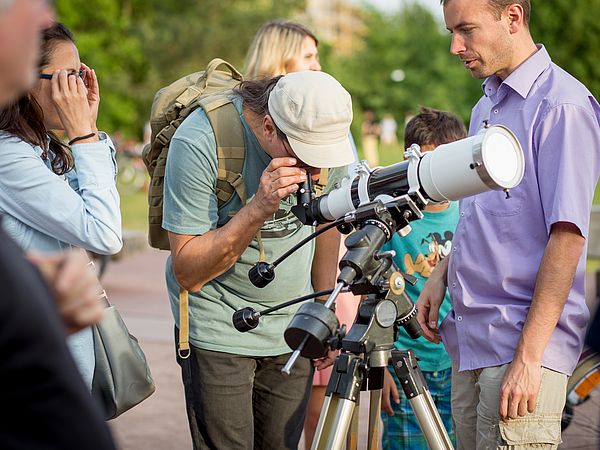
As a university, we see ourselves as part of society. For us, citizen science is a central component of open, responsible, and dialogue-oriented science. Together with researchers, non-scientific participants collect, analyze, or interpret data, thereby contributing to the generation of new insights—including in numerous projects at the University of Bremen. This is because many of the major challenges of our time—such as those in the areas of the environment, health, or digitalization—affect society as a whole. Citizen science combines scientific expertise with social engagement, thereby opening up new perspectives, expanding the data base for scientific research, and strengthening the dialogue between science and the public. As a result, research becomes more transparent, relevant, and accessible. This mutual exchange fosters trust, understanding, and shared responsibility.

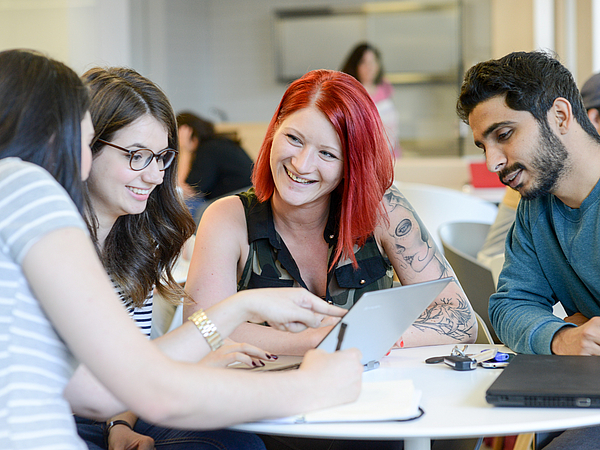
Young people work at a laptop.

Transdisciplinary Teaching

Transdisciplinary teaching is an important component of the University of Bremen’s profile and combines research-based learning with social responsibility and knowledge transfer. Through collaboration among students, researchers, and non-academic stakeholders, new perspectives on complex societal challenges emerge. As a result, students develop subject-specific, reflective, and collaborative skills and experience scholarship as a shared process of knowledge production and social shaping. The University of Bremen views transdisciplinary teaching as a central contribution to an open, participatory, and impact-oriented academic community that shapes the future in partnership with society.


Collection of ideas on moderation cards

+++ Apply by August 31, 2026: Impact Pioneers in Residence +++

The University of Bremen invites researchers from all disciplines and external experts to participate in the new “Impact Pioneer in Residence” fellowship program! Impact Pioneers—who receive a fellowship—can spend three to six months as guests at the university, conducting research, exchanging ideas, and networking within a working group.

There are few restrictions on the topics of these residencies, provided the most important requirement is met: The partnership between a university researcher and an Impact Pioneer must address societal transformation processes in a joint project.


Sharing Knowledge

Science thrives on exchange—and on bringing together different perspectives. That is why the University of Bremen offers numerous science communication formats that facilitate dialogue between research and society. Whether through discussions, lectures, workshops, or hands-on activities, these events create spaces for questions, ideas, and shared reflection. They invite participants to learn about current research, examine topics from different angles, and engage in conversation with one another.

Flyer von Science goes Public auf einem Bartresen

Science goes Public

SCIENCE GOES PUBLIC! quenches your thirst for knowledge. Twice a year, original science topics are presented in a varied and humorous way at selected pubs and bars in Bremerhaven and Bremen. Afterward, there is an opportunity for direct conversation between the audience and the scientists.

[Translate to English:] Tonstudio mit Mikrofon und Mischpukt

Listen to Science

In its podcasts, the University of Bremen brings current topics, exciting projects, and academic perspectives straight to your ears. Researchers, students, and industry partners share their perspectives, talk about their ideas, and discuss socially relevant issues. This creates an accessible gateway to academia—informative, diverse, and available to listen to anywhere.

OPEN CAMPUS

“Opening Worlds—Sharing Knowledge”: Under this motto, the university invites the interested public to OPEN CAMPUS every two years. The open-air event in Campus Park offers insights into research and teaching.

From the files to the stage

"From the Files to the Stage" - under this motto, students of history and actors from the bremer shakespeare company (bsc) develop staged readings from original historical documents.

The Bremen University Talks

Every year in November, the Wolfgang Ritter Foundation, the University of Bremen and Unifreunde e.V. invite you to the Bremen University Talks to stimulate a dialogue on current issues with social actors.

Comic

NŒRDMAN - The Science Comic

The science comic “NŒRDMAN,” created by the Computer Architecture Club (AGRA) in the Department of Mathematics and Computer Science, humorously explains the world of the Internet in a typically North German, nerdy style.

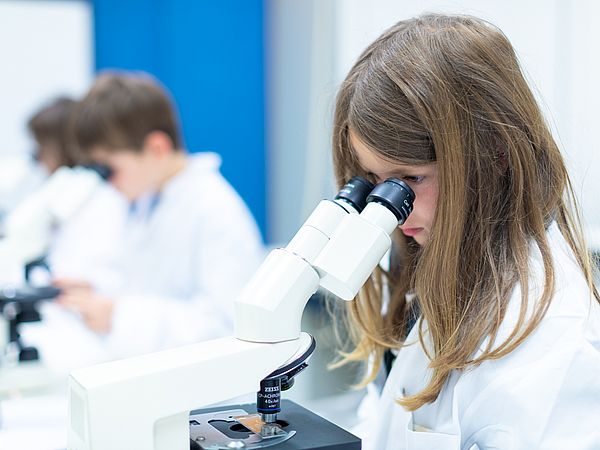
Mädchen blickt ins Mikroskop

Science from the very beginning

Through a variety of interactive formats, the University of Bremen specifically inspires young groups to engage with science and research. Whether at the Children’s University with lectures and workshops, in school labs conducting their own experiments, through programs like the Summer Academy, or in projects where students conduct their own research—young people can actively discover, help shape, and experiment with science.

A student and a senior student in conversation.

Senior study programme

Old and young study together: senior citizens can attend selected courses at the university as part of the senior citizens' study programme.

Day of Remembrance

Since 1996, 27 January has been the day of remembrance for the victims of National Socialism. On 27 January 1945, the Auschwitz concentration camp was liberated by soldiers of the Red Army. The University of Bremen commemorates this day with lectures by guest speakers.


Science in the City

Research and knowledge transfer thrive on dialogue with society. For this to succeed, Bremen needs places where people can come together: accessible, open, and inviting. As part of the exhibition “WARUM? DARUM.” marking the 50th anniversary of the University of Bremen, the exhibition also highlighted places where researchers, faculty, and students play a vital role in business, politics, government, education, or culture—and where ideas and collaborations originating at the university have brought about new developments.

[Translate to English:] The picture shows the entrance to the Domshof Forum in Bremen.

Kassenhalle

As a “third place” for science communication, the Kassenhalle at the Uni-Forum on Domshof fosters exchange between the university and society. Here, transdisciplinary diversity becomes visible and tangible: through dialogue, participatory knowledge sharing, and creative engagement with science and research.

[Translate to English:] Blick in den Ausstellungsraum im Haus der Wissenschaft

House of Science

Centrally located and supported by the state’s scientific institutions, the “House of Science” invites visitors to experience cutting-edge research firsthand through exhibitions, lectures, and discussion series.

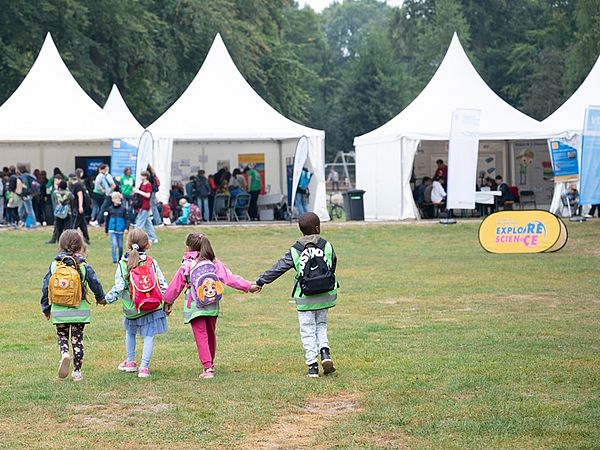
Explore Science at Bürgerpark

Every September, the Klaus Tschira Foundation’s “Explore Science” STEM experience days transform Bremen’s Bürgerpark into an open-air laboratory. Since 2018, the University of Bremen has been participating with workshops, shows, and hands-on stations to bring its research to life for students, families, and other curious visitors.


Research with Impact

The University of Bremen’s Transfer Magazine

How do scientific ideas give rise to societal innovations? The University of Bremen explores this question in its latest transfer magazine. Under the motto “On Your Marks, Ready, Go!,” the magazine—presented in a modern, magazine-style format—guides readers through the phases of knowledge and technology transfer—from conceptualization to initiation and implementation, all the way to making an impact on society and the economy. 

The focus is on people, projects, and collaborations that demonstrate: Research at the University of Bremen does not take place in an ivory tower, but rather has an impact—for Bremen and far beyond.

more

Dr. Hanne Ballhausen

Public Engagement & Youth Interaction Groups, MINT, BNE
 

hanne.ballhausen(at)vw.uni-bremen.de

Tel.: 0421/218-57106

Dr. Julia Gantenberg

Strategic Science Communication, Public Engagement & Participation
 

julia.gantenberg(at)vw.uni-bremen.de

Tel.: 0421/218-60393

UniTransfer - Service Center for Transfer Activities

With a science-based and society-oriented approach, UniTransfer supports researchers and university members in developing, implementing, and promoting their transfer activities. At the same time, UniTransfer serves as a low-threshold point of contact for stakeholders from business, civil society, and politics, and fosters dialogue between the university and the public. With a broad understanding of transfer and clear offerings, UniTransfer strengthens productive collaborations, supports societal transformation processes and helps ensure that scientific findings have an impact—and that societal issues are incorporated into research and teaching.

Contact: engage(at)uni-bremen.de

more