
Heisenberg Programme
The Heisenberg Programme of the German Research Foundation (DFG) supports outstanding researchers who have qualified for a tenured professorship and are preparing for a leading academic position.
Four types of funding are available within the Heisenberg Programme:
- Heisenberg professorship
- Heisenberg position
- Heisenberg temporary substitute position for clinicians
- Heisenberg fellowship
Once researchers have been accepted, they can select between the four funding types or combine them as needed during the five-year funding period.

Prof. Dr. Jan-Hendrik Hehemann (2021)
Faculty Biology / Chemistry
Jan-Hendrik Hehemann is a Heisenberg professor who researches the role of algal polysaccharides in marine carbon storage. His previous Marine Glycobiology research group was based at MARUM and simultaneously at the Max Planck Institute for Marine Microbiology in Bremen. Building on this research, the Department of Carbon Storage & Glycobiochemistry is now being established at the University of Bremen’s Faculty 2 (Biology / Chemistry) and MARUM.

Dr. Michael Fischer (2021)
Faculty of Geosciences
With funding of the Heisenberg Programme, Dr. Fischer is conducting “Comparative, Modeling-Based Investigations into the Adsorption of Pharmaceuticals in Zeolites” in a project of the same name. Zeolites have various potential applications, including the removal of pharmaceutical residues from wastewater. A comprehensive removal of these pollutants is not only desirable from an ecological perspective but also helps prevent the formation of antibiotic-resistant bacteria. Additionally, zeolites could also be used as carrier materials to enable a controlled release of active ingredients in the human body. The project’s main aim is to identify the most promising zeolites for these applications with the help of atomistic modeling methods.

Prof. Dr. Martin Könneke (2018)
MARUM - Center for Marine Environmental Sciences
Ammonia-oxidizing archaea (AOA) are among the most abundant organisms on our planet and play a crucial role in the global nitrogen cycle. With a cell diameter of only 200 nanometers, they are small even for microorganisms, and yet account for about 20% of them. Using microbiological and biogeochemical analyses, Martin Könneke was able to demonstrate during his Heisenberg Fellowship that the energy-efficient chemolithoautotrophic physiology of planktonic AOA means they are perfectly adapted to the low-nutrient conditions of the oceans, and they play a significant role in the chemosynthetic production of biomass in the dark regions of the oceans. In close collaboration with MARUM’s Organic Geochemistry Research Group, he was able to decipher the AOA lipidome, i.e., the composition of membrane lipids, and illustrate the impact of various environmental parameters on the biosynthesis of these unique lipids. These microbiological studies on pure cultures are essential for interpreting geochemical proxies from marine sediments and using them to reconstruct past (paleo)climate scenarios.
Prof. Dr. Sebastian Maneth (2017-2023)
Faculty of Mathematics / Computer Science
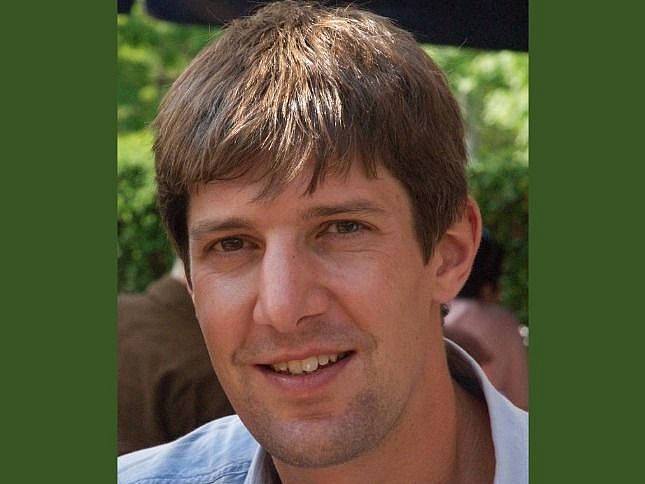
As a Heisenberg professor, Sebastian Maneth developed new methods for processing data in compressed form, with a focus on logistics and new media. His research is based on recognizing and exploiting repetitions within data, which can lead to significant acceleration of algorithms. In some cases, the modified algorithms can run thousands of times faster than those based on the original data.

Prof. Dr. Thorsten M. Gesing (2011)
Faculty Biology / Chemistry
Thorsten M. Gesing has been a Heisenberg professor since 2011 and is working in the field of solid-state chemistry, focusing on the atomic structure and temperature-dependent properties of materials, including modern, sustainable nano-materials, and powdered compounds in basic research and applied chemistry.