
Homepage

News

New Investigation of the Ozone Layer Surprise Researchers

The ozone layer plays an important role in our climate system, and it protects the biosphere from damaging ultraviolet radiation. An international team of researchers recently published data that reveal an increase of hydrogen chloride (HCl) in the stratosphere, the atmospheric layer at an altitude between 5 and 15 thousand feet. This substance plays an important role in depletion of the ozone layer. According to the Montreal Protocol, an international agreement on reducing the production of substances that deplete the ozone layer reached in 1989, no such increase should have been allowed to happen. The countries that signed up to the environmental agreement entered into a commitment to reduce emissions of the chlorine and bromine chemicals responsible for destroying stratospheric ozone, and eventually to ban them altogether. Researchers believe a transient – but nevertheless ongoing – abnormality in atmospheric circulation may be responsible for the increase. An environmental physicist at the University of Bremen, Professor Justus Notholt, coauthored the recent study containing these surprising results.

Background

Solar rays break down the hydrochlorofluoralcarbons (CFC) present in the stratosphere into chlorine atoms. These then form hydrogen chloride (HCl), the main reservoir of chlorine in the stratosphere. The chemical processes that take place during the polar winter lead to chlorine atoms being released from this reservoir. When the polar spring arrives, these atoms subsequently deplete the ozone. Whether the stratospheric ozone layer can remain intact depends on whether countries respect the Montreal Protocol, which essentially bans the production of CFCs and similar compounds. These substances are responsible for the depletion of the ozone layer observed over the past 30 years or so. It is generally recognized that over the past decade the Montreal Protocol has been successful in reducing the atmospheric pollution caused by CFCs, and scientists are optimistic that the stratospheric ozone layer will have completely recovered by the second half of this century.

Results of the study

In order to judge whether the Montreal Protocol is really curbing the production of substances that deplete ozone it is necessary to monitor the long-term developments taking place in the stratospheric CFC layer. The latest increase in HCl concentrations was only observed in the northern hemisphere. In the stratosphere of the southern hemisphere the concentration is being reduced in accordance with that permitted by the Montreal Protocol. Researchers have now discovered that the increase in HCl is connected with an abnormality in atmospheric circulation, which has slowed down the ascent of air masses in the stratosphere of the northern hemisphere. This has subsequently enabled the sun to release more chlorine from the CFCs, raising the concentration of HCl. The results are based on data partially systematically collected over decades via a network with weather stations in Spitsbergen, Greenland, Sweden, Switzerland, Japan, Tenerife, Australia and New Zealand. These ground-based measurements are verified by satellite observations and model simulations.

How effective is the Montreal Protocol?

By showing that the increase in HCl is attributed to a change in atmospheric circulation rather than an increase in the presence of new substances that lead to the deletion of ozone, the study proves that the Montreal Protocol continues to be effective. However, the predicted long-term reduction of ozone depleting substances in the atmosphere is turning out to be more complicated than previously thought. In the words of Professor Notholt: “Our observations don’t call the Montreal Protocol into question. Rather, they reveal that atmospheric variability, and maybe climate change too, can also have an effect on whether the ozone layer can fully recover. This is not going to be a uniform process, but rather an up and down one. Reducing the presence of ozone depleting chemicals in the atmosphere is going to take a very long time, during which the stratospheric ozone layer will continue to remain at risk.”

Publication in the science journal “Nature”

These spectacular research results have been published in the science journal “Nature”, a weekly English-language journal. This highly respected journal is the most cited interdisciplinary science journal.

If you would like to have more information on this topic, please contact:
University of Bremen
Institute for Environmental Physics
Prof.Dr. Justus Notholt
Phone: +49 421-218-62190
Cell: +49 176-30346533
e-mail: jnotholtprotect me ?!iup.physik.uni-bremenprotect me ?!.de

Events

06. Jan
Mittagskonzert: „Befreiung naht!“ – Eigene Kompositionen und Texte zum CD-Release
Theatersaal der Universität
12:30 12:55
More
07. Jan
Rahel Fischbach (William & Mary), "Making Sense of Violence in the Qur'an: A Hermeneutic-Aesthetic Approach"
UNICOM, InIIS 7.2210
12:00 13:30
More
08. Jan
The Martian Mindset: A Scarcity-Driven Engineering Paradigm
ZARM Universität Bremen - Am Fallturm, 2 - Raum 1730
14:00 15:00
More
08. Jan
Gereon Niedner-Schatteburg (Univrsität Kaiserslautern)
Hörsaal H3, Geb. NW1, Otto-Hahn-Allee 1, 28359 Bremen
16:00 17:00
More
09.05. Jan Jun
YUFE Ideas Lab Incubation Program
Blended: Online / Madrid
All day
More
09. Jan
Aus den Akten auf die Bühne - Karrieren in Bremen nach 1945 - Kurt A. Becher – Käthe Popall – Alfred Ries
Theater am Leibnizplatz
19:30 22:00
More
11. Jan
LiteraTour Nord: Reading tour 2025/26 – Katerina Poladjan
Theater Bremen, Goetheplatz 1-3
20:00 21:30
More
13. Jan
Universität im Gespräch
GW2, B3009
10:00 12:00
More
13. Jan
Mittagskonzert: Vier Hände, viele Klangwelten
Theatersaal der Universität
12:30 12:55
More
13. Jan
Benjamin Goossen (Boston) | Mennonites and Lebensraum. Situating a Christian Denomination in Hitler‘s Empire
Online
18:00 20:00
More
14. Jan
Vortrag | Ringvorlesung Gefährdete Demokratie | WOC & Profs gegen Rechts Rahel Jaeggi (Berlin): Regressive Demokratie – Regressive Moderne
Rotunde
18:15 20:00
More
14. Jan
Profs gegen Rechts / Prof. Dr. Rahel Jaeggi (Humboldt Universität zu Berlin): Regressive Demokratie – Regressive Moderne
Rotunde/Cartesium
18:15 19:45
More
15. Jan
Migrantische Arbeitskämpfe und Machtressourcen in der Fleischindustrie
Forum am Domshof
16:00 18:00
More
19. Jan
Heidi Hein-Kircher (Herne/Bochum) | Die Sittenreformbewegung in Polen als Teil einer europäischen Lebensreformbewegung in der ersten Hälfte des 20. Jahrhunderts
IW3 0330
18:00 20:00
More
20. Jan
Mittagskonzert: Alle Wege führen zum Tango
Theatersaal der Universität
12:30 12:55
More
20. Jan
studio Vortrag: Regine Heß (München) "Wer wohnt wo auf großen Ausstellungen? Ungleiche (Wohn-)Modelle zeigen"
18:00 20:00
More
21. Jan
Vortrag und Buchdiskussion | WOC Agora #12 Florian Sprenger (Bochum): Ich-Sagen. Genealogie der Situiertheit
Cartesium Rotunde U Bremen
18:15 19:45
More
21. Jan
Aus den Akten auf die Bühne - Geflüchtet, unerwünscht, abgeschoben. "Lästige Ausländer" in der Weimarer Republik
Theater am Leibnizplatz
19:30 22:00
More
22. Jan
SALON TIER Vortrag: Elisabeth Luggauer (Stadtanthropologin, Humboldt-Universität zu Berlin) Multispezies-Konvivialitäten: Wie Straßenhunde Stadt (mit)gestalten
18:00 20:00
More
23. Jan
YUFE R&R Webinar Series: Work Well-Being in Academia
Online
10:00 12:00
More
25. Jan
LiteraTour Nord: Reading tour 2025/26 – Annett Gröschner
Theater Bremen, Goetheplatz 1-3
20:00 21:30
More
26. Jan
Seth Bernstein (Gainesville) | Big Brother Where Art Thou? Police Intelligence and Artificial Intelligence in Soviet Secret Police Archives
Online
18:00 20:00
More
27. Jan
Mittagskonzert: Dos a Cu4tro: "Solo Solare" – Ein Portraitkonzert
Theatersaal der Universität
12:30 12:55
More
28. Jan
Das Goldene Plietsch 2026
Forum am Domshof
16:30 Open End
More
01. Feb
„In das Unbekannte“ – Semesterabschlusskonzert von Orchester und Chor der Universität Bremen
Theatersaal der Universität
17:00 19:00
More
12. Feb
Aus den Akten auf die Bühne - "Im Lager hat man auch mich zum Verbrecher gemacht" - Margarete Ries: Vom "asozialen" Häftling in Ravensbrück zum Kapo in Auschwitz
Theater am Leibnizplatz
19:30 22:00
More
18.20. Feb
Research – Attitude – Activism? Inclusion Research between Educational Utopia and System Conformity
University of Bremen
All day
More
24. Feb
Bremer Ocean Day
Campus Uni Bremen, Hörsaalgebäude (Keksdose)
09:30 12:30
More
24. Feb
Info-Veranstaltung zum Übergang vom Bachelor (Lehramt) in den Master of Education
Zoom
13:00 14:00
More
24. Feb
Aus den Akten auf die Bühne - Karrieren in Bremen nach 1945 - Kurt A. Becher – Käthe Popall – Alfred Ries
Theater am Leibnizplatz
19:00 21:30
More
25.27. Feb
International Conference on Dynamics in Logistics (LDIC 2026)
Mehrzweckhochhaus (MZH), Bibliothekstraße 5, 28359 Bremen
All day
More
02. Mar
Aus den Akten auf die Bühne - Reichsführers gehorsamster Becher: Vom SS-Standartenführer zum Millionär
Theater am Leibnizplatz
19:00 21:30
More
03. Mar
Aus den Akten auf die Bühne – Menschen auf der Flucht - Anna Seghers "Transit"
Falstaff im Theater am Leibnizplatz
19:30 21:00
More
09. Apr
Prof. Dr. Matthias Bartelmann (Universität Heidelberg): Universalität kosmischer Strukturen
Hörsaal H3, Geb. NW1, Otto-Hahn-Allee 1, 28359 Bremen
16:00 17:00
More
27. Apr
Info-Veranstaltung: Lehramt studieren an der Uni Bremen
Zoom
15:30 17:00
More
13. Jun
OPEN CAMPUS
Campus der Universität Bremen
All day
More
13. Jun
Open Campus der Universität Bremen
All day
More
15. Jun
Gesellschaftliche Unterschiede: Warum wir uns voneinander untrscheiden und warum das (manchmal) wichtig ist
Hanse-Wissenschaftskolleg, Lehmkuhlenbusch 4, 27753 Delmenhorst
19:30 21:00
More
22.26. Jun
Sommerakademie
Universität Bremen
All day
More
22. Jun
Info-Veranstaltung: Lehramt studieren an der Uni Bremen
Zoom
15:30 17:00
More
24. Jun
Info-Tag für Studieninteressierte 2026
Campus der Uni Bremen
08:30 16:00
More
17. Aug
Bernsteine: Zeitkapseln der Evolution
Hanse-Wissenschaftskolleg, Lehmkuhlenbusch 4, 27753 Delmenhorst
19:30 21:00
More
03. Sep
Warum wir wählen, was wir wählen: Unser Wahlverhalten in unsicheren Zeiten
VHS Delmenhorst, Am Turbinenhaus11, 27749 Delmenhorst
19:30 21:00
More
05. Oct
Wahlmanipulation im digitalen Zeitalter: Wo liegen die Gefahren?
Hanse-Wissenschaftskolleg, Lehmkuhlenbusch 4, 27753 Delmenhorst
19:30 21:00
More
02. Nov
Wölfe in Niedersachsen
Hanse-Wissenschaftskolleg, Lehmkuhlenbusch 4, 27753 Delmenhorst
19:30 21:00
More
All Events

Studies

Students walking along the MZH and chatting

Studying at the University of Bremen

Whether it be the compact campus, the diverse study programs on offer, or the green cycling city – a degree at the University of Bremen has a lot to offer.

You can choose from a broad range of degree program at the University of Bremen:

  • more than 100 bachelor’s and master’s degree programs
  • the state examination in law
  • international degree courses and further training offers

Profile

The University of Bremen is one of Germany’s medium-sized universities. In its mission statement, the university prioritizes:

Academic Consultation

Visit the following points of contact for information on studying:

Applying to Study

We provide comprehensive and detailed information on applications and enrollment for the following areas:

All about Research

Test tubes with different coloured liquids.

High Level of Third-Party Funding

A great strength of the University of Bremen is its considerable success in the acquisition of third-party funds, both in individual as well as in collaborative research. The German Research Foundation (DFG) is the largest provider of third-party finance: Besides the MARUM Cluster of Excellence, the University of Bremen is currently involved in no less than seven Collaborative Research Centers, as well as a number of research groups and priority programs.

Zwei Personen bei der gemeinsamen Arbeit im Labor.

Strategic Promotion of Talent

The targeted promotion of young talent, unlocking potential, and early independence are among the guiding principles of the University of Bremen. We offer intensive support to young academics in six DFG research training groups, numerous junior research groups and also through doctoral programs offered in cooperation with non-university research institutions.

Zwei Lehrende arbeiten vor Zuhörern an einem Flipchart.

Lifelong Learning

The University of Bremen is a place of lifelong learning. With our offers of continuing education we enable you to acquire knowledge of cutting-edge research. Discover the wide range of our offers and benefit from the unique combination of practice-oriented learning and innovation.

Facets of the University of Bremen

Diversity

The diversity of our students and staff is both a framework as well as a prerequisite for high quality in research and teaching. As a cross-sectional priority and central profiling feature, we take account of diversity in our teaching and learning formats, in the structure of degree programs, and in the content of research and teaching. Moreover, diversity orientation and equal opportunity also guide us in the composition of teams and the design of counseling.   

International

Internationality is a strategic profiling objective of the University of Bremen. In keeping with our self-image as an international university, we see internationalization as a process that extends into all areas of the university – whether research, studies or administration. People from more than 100 nations enrich campus life. We are networked worldwide. In close cooperation with our partners, we work on the advancement of knowledge and finding solutions to global challenges.

Sustainability

The University of Bremen has been committed to sustainable development for years. Numerous projects and measures exist in the areas of research, teaching, operations, governance, and transfer, supporting the implementation of the 17 Sustainable Development Goals (SDGs) by the United Nations. Among them are the outstanding EMAS environmental management program, the university’s promotion of social sustainability as well as several research institutions with a focus on sustainability

Have you Heard of...?

There is a lot to be discovered on campus. What’s behind all those doors? up2date. online magazine knocks on some of them to find out. Welcome to a slightly different tour of the campus.

A man in front of a green screen is looking into the camera.

Have You Heard of... the ZMML?

Learning platform, testing center, online courses, lecture halls with opencast technology, a film studio, and much more – when you see digital teaching in action on campus, the ZMML is usually behind it.

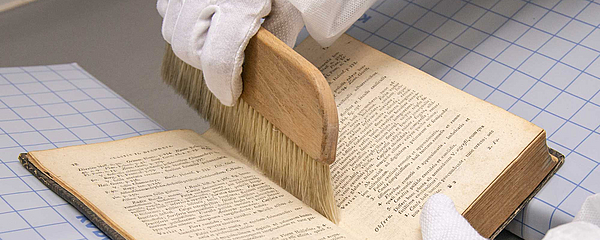
A gloved hand runs a brush through the crease of a book.

Have You Heard of... the SuUB’s Restoration Workshop?

Equipped with an array of tools that includes brushes, book support wedges, and soot sponges, the restoration workshop saves historical books from decay. Welcome to a slightly different tour of the campus!

  • Go to page: aaq Akkreditierung
  • Go to page: Gütesiegel des Deutschen Hochschulverbands
  • Go to page: EMAS Zertifizierung für geprüftes Umweltmanagement
  • Go to page: Zertifikat audit familiengerechte hochschule
  • Go to page: Audit „Internationalisierung der Hochschulen“ der HRK
  • Go to page: Logo Audit "Vielfalt gestalten" des Stifterverbandes
  • Go to page: CHE Ranking
  • Go to page: Siegel Gründungsradar des Stifterverbandes
  • Go to page: Logo of the HR Excellence in Research Award