Homepage

News

ZARM-Experiment in Space

In October 2016, the space transporter CYGNUS operated by the American firm Orbital ATK docked onto the ISS international space station. Part of the freight it was carrying was the international experimental setup called SAFFIRE II. The University of Bremen’s Center for Applied Aerospace Research and Microgravity (ZARM) contributed to the experiment with a large material sample.

New insights into fire behavior in space

SAFFIRE II is an experiment conceived by US-American, Russian, Japanese, and European scientists. They are attempting to gain better knowledge of the combustion behavior of solid materials under conditions of zero gravity. The task of the ZARM research team is connected with fire safety on manned space craft. Up to now, the testing and qualification of materials used in the construction of space craft has taken place exclusively in Earth-bound laboratories. These results, though, cannot be transferred 1:1 onto conditions prevailing in a space station in orbit. A fire breaking out on a space station would burn significantly less intensely than on Earth, but would generate much more heat. This is because under conditions of zero gravity there is no convection flow to carry the hot gases upwards and away from the seat of the fire. This means, for instance, that a burning substance in an Earth-bound laboratory may well burn itself out, whereas in a space station it would simply continue to burn for a much longer time.

The experiment and initial results

In the night of November 21, 2016, the space transporter carrying the SAFIRE II experimental setup was disconnected from the ISS. The experiment could begin. There was visible relief on the faces of observers at the Center for Applied Aerospace Research and Microgravity as the first images of a burning Perspex sample appeared on their screens. The experimental setup in space was working smoothly: The air stream had set in at the right moment: The hotwire had functioned and ignited the sample. When the ignition apparatus was switched off, the sample first continued to burn weakly before picking up again and turning to a fully fledged fire.

Initial evaluation

Initial evaluations carried out by the ZARM researchers reveal considerable differences compared with results obtained using the same material in lab experiments under terrestrial conditions. Whereas a fire on Earth burns with sharply contoured, high-contrast tongues of flame, the fire on SAFFIRE II looks as though being observed through a frosted glass screen – the flames lack structure, are not clearly defined, and “dance” more slowly. Soon, though, more important differences become visible: The fire on board CYGNUS spread 10 times more slowly than in Earth-bound lab experiments. Moreover, while burning Plexiglas on Earth tends not to produce heavy fumes, under conditions of zero gravity it is quite the opposite. However, this obviously safety-relevant aspect now complicates evaluation of SAFFIRE II. For, in contrast to Earth-bound experiments in which the rising flames obscure the lower layer zone of rising combustible pyrolysegases, flames under conditions of zero gravity not only burn much more slowly – they also spread out farther away from the flames.

This result represents an important step forward in understanding the behavior of fire in space: Because a fire in space spreads more slowly and exhibits a weaker turbulence – both effects caused by the lack of convection airflow in conditions of zero gravity – the area surrounding the material sample below and far-above the flames becomes considerably hotter than it would on Earth. This not only results in the fire penetrating deeper into the material, but the more intense heat can shift categorization of material properties from “self-extinguishing” to “combustible”. Thus, a fire like that in a space station would create more heat and burn more slowly.

The way the material sample in SAFFIRE II is deformed illustrates the effect of the stronger heat which was generated. The surface structures are more damaged than they would be in an Earth-bound experiment – even in areas farther away from the flames.

Happy faces in Bremen after the successful experiment

The ZARM research team were particularly pleased they were able to reach first assessments of the experiment after just a few hours had gone by. Nevertheless, they still have a lot to do evaluating the copious date produced by sensor measurements taken during the 11-minute experiment in space. Things like inflow air velocity and temperature, oxygen concentrations, pressure, air humidity, and radiation density – not to mention the 20,000 photos taken during the experiment. This will keep them busy for some time to come. Once everything is completed, though, the results will be published in a scientific study. They will then be used in the planning of the forthcoming SAFFIRE V experiment, which is expected to deliver more vital information leading to fire safety on manned space craft.

If you would like to have more information, feel free to contact:

Christian Eigenbrod
Head of the research group “Aerospace Combustion Engineering”
Center for Applied Aerospace Technology and Microgravitation, University of Bremen
christian.eigenbrodprotect me ?!zarm.uni-bremenprotect me ?!.de
Phone: +49 421 218-57780

Information for members of the press:
Center for Applied Aerospace Technology and Microgravitation, University of Bremen
Dr. Lucie-Patrizia Arndt
lucie-patrizia.arndtprotect me ?!zarm.uni-bremenprotect me ?!.de
Phone: +49 421 218-57817
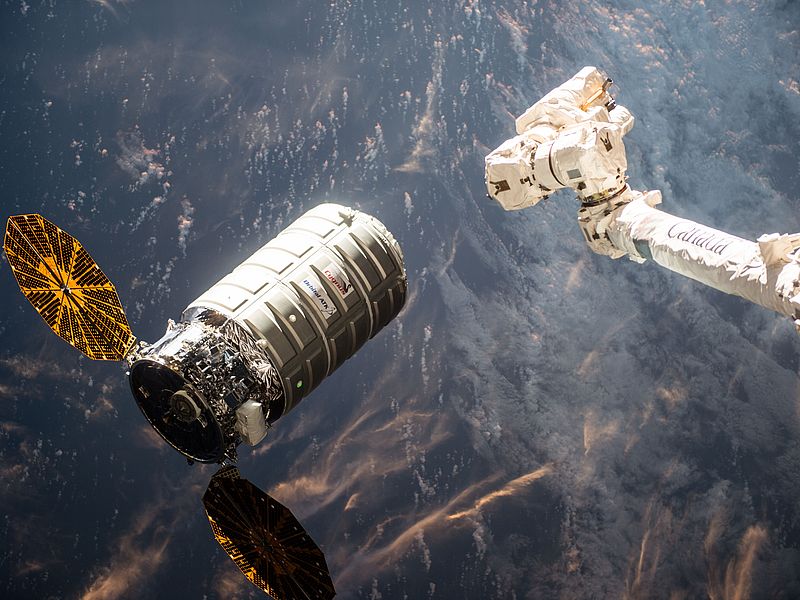
Raumtransporter kurz vor dem Ankoppeln an die ISS
Aufnahmen vom Abdockmanöver des Raumtransporters CYGNUS von der internationalen Raumstation ISS am 21. November 2016Der CYGNUS-Raumtransporter Orb 6 mit dem Vorgänger-Experiment SAFFIRE I kurz vor dem Ankoppeln an die ISS im März 2016.

Events

15. Dec
Annette Schuhmann (Potsdam ) | Wir sind anders! Wie die DDR Frauen bis heute prägt.
Kassenhalle am Domshof
18:00 20:00
More
16. Dec
Mittagskonzert: Epische Klangwelten am Flügel: Klassik trifft Game & Film
Theatersaal der Universität
12:30 12:55
More
16. Dec
Dr.-Ing. Niklas Wolff (Kiel University): The New Nitrides – Thin Film Ferroelectrics with Wurtzite-type Structure
S1360, Geb. NW1, Otto-Hahn-Allee 1, 28359 Bremen
16:00 17:00
More
16. Dec
Lena Hezel (Tübingen): Ist Armut Diskriminierung? Perspektiven auf Klasse, Klassenverhältnisse und „Klassismus“
Studierhaus U Bremen
16:15 18:00
More
17. Dec
What can artists contribute to climate adaptation? (artec Lunch Talk)
SFG 2210
12:15 13:00
More
17. Dec
Profs gegen Rechts / Prof. Dr. Heike Radvan (Universität Tübingen): Betroffen von extrem rechter Dominanz in der Kommune – Erfahrungen, Handlungsoptionen, Gegenstrategien
Rotunde
18:15 19:45
More
17. Dec
Aus den Akten auf die Bühne - Karrieren in Bremen nach 1945 - Kurt A. Becher – Käthe Popall – Alfred Ries
Theater am Leibnizplatz
19:30 22:00
More
18. Dec
Nobelpreiskolloquium, Prof. Dr. Philip Moll (Max Planck lnstitut für Struktur und Dynamik der Materie, Hamburg): "Quantum mechanics goes big"
Hörsaal H3, Geb. NW1, Otto-Hahn-Allee 1, 28359 Bremen
16:00 17:00
More
18. Dec
Towards exploration of stacks of highly heterogeneous technologies with very fine-pitch 3D connectivity
NW1, U1050
16:00 17:30
More
19. Dec
An Evening with Maksym Butkevych
Europapunkt
18:00 21:00
More
06. Jan
Mittagskonzert: „Befreiung naht!“ – Eigene Kompositionen und Texte zum CD-Release
Theatersaal der Universität
12:30 12:55
More
08. Jan
Gereon Niedner-Schatteburg (Univrsität Kaiserslautern)
Hörsaal H3, Geb. NW1, Otto-Hahn-Allee 1, 28359 Bremen
16:00 17:00
More
11. Jan
LiteraTour Nord: Reading tour 2025/26 – Katerina Poladjan
Theater Bremen, Goetheplatz 1-3
20:00 21:30
More
13. Jan
Mittagskonzert: Vier Hände, viele Klangwelten
Theatersaal der Universität
12:30 12:55
More
13. Jan
Benjamin Goossen (Boston) | Mennonites and Lebensraum. Situating a Christian Denomination in Hitler‘s Empire
Online
18:00 20:00
More
14. Jan
Vortrag | Ringvorlesung Gefährdete Demokratie | WOC & Profs gegen Rechts Rahel Jaeggi (Berlin): Regressive Demokratie – Regressive Moderne
Rotunde
18:15 20:00
More
14. Jan
Profs gegen Rechts / Prof. Dr. Rahel Jaeggi (Humboldt Universität zu Berlin): Regressive Demokratie – Regressive Moderne
Rotunde/Cartesium
18:15 19:45
More
15. Jan
Migrantische Arbeitskämpfe und Machtressourcen in der Fleischindustrie
Forum am Domshof
16:00 18:00
More
19. Jan
Heidi Hein-Kircher (Herne/Bochum) | Die Sittenreformbewegung in Polen als Teil einer europäischen Lebensreformbewegung in der ersten Hälfte des 20. Jahrhunderts
IW3 0330
18:00 20:00
More
20. Jan
Mittagskonzert: Alle Wege führen zum Tango
Theatersaal der Universität
12:30 12:55
More
21. Jan
Vortrag und Buchdiskussion | WOC Agora #12 Florian Sprenger (Bochum): Ich-Sagen. Genealogie der Situiertheit
Cartesium Rotunde U Bremen
18:15 19:45
More
23. Jan
YUFE R&R Webinar Series: Work Well-Being in Academia
Online
10:00 12:00
More
25. Jan
LiteraTour Nord: Reading tour 2025/26 – Annett Gröschner
Theater Bremen, Goetheplatz 1-3
20:00 21:30
More
26. Jan
Seth Bernstein (Gainesville) | Big Brother Where Art Thou? Police Intelligence and Artificial Intelligence in Soviet Secret Police Archives
Online
18:00 20:00
More
27. Jan
Mittagskonzert: Dos a Cu4tro: "Solo Solare" – Ein Portraitkonzert
Theatersaal der Universität
12:30 12:55
More
27. Jan
Tag des Gedenkens an die Opfer des Nationalsozialismus
GW 1 Hörsaal
16:00 18:00
More
28. Jan
Das Goldene Plietsch 2026
Forum am Domshof
16:30 Open End
More
01. Feb
„In das Unbekannte“ – Semesterabschlusskonzert von Orchester und Chor der Universität Bremen
Theatersaal der Universität
17:00 19:00
More
18.20. Feb
Research – Attitude – Activism? Inclusion Research between Educational Utopia and System Conformity
University of Bremen
All day
More
24. Feb
Bremer Ocean Day
Campus Uni Bremen, Hörsaalgebäude (Keksdose)
09:30 12:30
More
09. Apr
Prof. Dr. Matthias Bartelmann (Universität Heidelberg): Universalität kosmischer Strukturen
Hörsaal H3, Geb. NW1, Otto-Hahn-Allee 1, 28359 Bremen
16:00 17:00
More
13. Jun
OPEN CAMPUS
Campus der Universität Bremen
All day
More
13. Jun
Open Campus der Universität Bremen
All day
More
15. Jun
Gesellschaftliche Unterschiede: Warum wir uns voneinander untrscheiden und warum das (manchmal) wichtig ist
Hanse-Wissenschaftskolleg, Lehmkuhlenbusch 4, 27753 Delmenhorst
19:30 21:00
More
22.26. Jun
Sommerakademie
Universität Bremen
All day
More
24. Jun
Info-Tag für Studieninteressierte 2026
Campus der Uni Bremen
08:30 16:00
More
17. Aug
Bernsteine: Zeitkapseln der Evolution
Hanse-Wissenschaftskolleg, Lehmkuhlenbusch 4, 27753 Delmenhorst
19:30 21:00
More
03. Sep
Warum wir wählen, was wir wählen: Unser Wahlverhalten in unsicheren Zeiten
VHS Delmenhorst, Am Turbinenhaus11, 27749 Delmenhorst
19:30 21:00
More
05. Oct
Wahlmanipulation im digitalen Zeitalter: Wo liegen die Gefahren?
Hanse-Wissenschaftskolleg, Lehmkuhlenbusch 4, 27753 Delmenhorst
19:30 21:00
More
02. Nov
Wölfe in Niedersachsen
Hanse-Wissenschaftskolleg, Lehmkuhlenbusch 4, 27753 Delmenhorst
19:30 21:00
More
All Events

Studies

Students walking along the MZH and chatting

Studying at the University of Bremen

Whether it be the compact campus, the diverse study programs on offer, or the green cycling city – a degree at the University of Bremen has a lot to offer.

You can choose from a broad range of degree program at the University of Bremen:

  • more than 100 bachelor’s and master’s degree programs
  • the state examination in law
  • international degree courses and further training offers

Profile

The University of Bremen is one of Germany’s medium-sized universities. In its mission statement, the university prioritizes:

Academic Consultation

Visit the following points of contact for information on studying:

Applying to Study

We provide comprehensive and detailed information on applications and enrollment for the following areas:

All about Research

Test tubes with different coloured liquids.

High Level of Third-Party Funding

A great strength of the University of Bremen is its considerable success in the acquisition of third-party funds, both in individual as well as in collaborative research. The German Research Foundation (DFG) is the largest provider of third-party finance: Besides the MARUM Cluster of Excellence, the University of Bremen is currently involved in no less than seven Collaborative Research Centers, as well as a number of research groups and priority programs.

Zwei Personen bei der gemeinsamen Arbeit im Labor.

Strategic Promotion of Talent

The targeted promotion of young talent, unlocking potential, and early independence are among the guiding principles of the University of Bremen. We offer intensive support to young academics in six DFG research training groups, numerous junior research groups and also through doctoral programs offered in cooperation with non-university research institutions.

Zwei Lehrende arbeiten vor Zuhörern an einem Flipchart.

Lifelong Learning

The University of Bremen is a place of lifelong learning. With our offers of continuing education we enable you to acquire knowledge of cutting-edge research. Discover the wide range of our offers and benefit from the unique combination of practice-oriented learning and innovation.

Facets of the University of Bremen

Diversity

The diversity of our students and staff is both a framework as well as a prerequisite for high quality in research and teaching. As a cross-sectional priority and central profiling feature, we take account of diversity in our teaching and learning formats, in the structure of degree programs, and in the content of research and teaching. Moreover, diversity orientation and equal opportunity also guide us in the composition of teams and the design of counseling.   

International

Internationality is a strategic profiling objective of the University of Bremen. In keeping with our self-image as an international university, we see internationalization as a process that extends into all areas of the university – whether research, studies or administration. People from more than 100 nations enrich campus life. We are networked worldwide. In close cooperation with our partners, we work on the advancement of knowledge and finding solutions to global challenges.

Sustainability

The University of Bremen has been committed to sustainable development for years. Numerous projects and measures exist in the areas of research, teaching, operations, governance, and transfer, supporting the implementation of the 17 Sustainable Development Goals (SDGs) by the United Nations. Among them are the outstanding EMAS environmental management program, the university’s promotion of social sustainability as well as several research institutions with a focus on sustainability

Have you Heard of...?

There is a lot to be discovered on campus. What’s behind all those doors? up2date. online magazine knocks on some of them to find out. Welcome to a slightly different tour of the campus.

A man in front of a green screen is looking into the camera.

Have You Heard of... the ZMML?

Learning platform, testing center, online courses, lecture halls with opencast technology, a film studio, and much more – when you see digital teaching in action on campus, the ZMML is usually behind it.

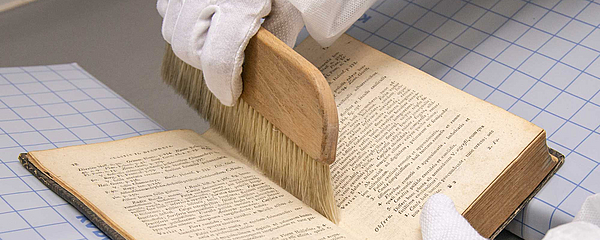
A gloved hand runs a brush through the crease of a book.

Have You Heard of... the SuUB’s Restoration Workshop?

Equipped with an array of tools that includes brushes, book support wedges, and soot sponges, the restoration workshop saves historical books from decay. Welcome to a slightly different tour of the campus!

  • Go to page: aaq Akkreditierung
  • Go to page: Gütesiegel des Deutschen Hochschulverbands
  • Go to page: EMAS Zertifizierung für geprüftes Umweltmanagement
  • Go to page: Zertifikat audit familiengerechte hochschule
  • Go to page: Audit „Internationalisierung der Hochschulen“ der HRK
  • Go to page: Logo Audit "Vielfalt gestalten" des Stifterverbandes
  • Go to page: CHE Ranking
  • Go to page: Siegel Gründungsradar des Stifterverbandes
  • Go to page: Logo of the HR Excellence in Research Award