Homepage

News

Interactive Visualization of Software for Spatially Distributed Teams

The Center for Computing Technologies (TZI) at the University of Bremen is investigating new methods for better understanding complex software as part of a DFG-funded project.

A comprehensive overview of the structure and operation of software is essential for its maintenance and further development. However, spatially distributed teams often find it difficult to develop a common understanding of complex projects. The Center for Computing Technologies (TZI) at the University of Bremen is therefore investigating various ways of supporting collaborative understanding processes in a new research project. In the two-year project, which is sponsored by the German Research Foundation (DFG), the Software Engineering working group, led by Prof. Rainer Koschke, is focusing on new media and software visualization technologies.

Minimizing Misunderstandings and Misinterpretations

With collaborative understanding, several participants attempt to work together to develop a model of the structure and behavior of a program. "In the process, they can mutually benefit from the different perspectives and expertise of other group members," Koschke explains. "Most of the time, it's helpful to externalize a shared model – that is, to make it visible and explicit to all – to reduce the risk of misunderstanding and misinterpretation."

In such situations, participants often create spontaneous sketches on the whiteboard, for instance of the static structure of a program. "It is not uncommon for the facts discussed to be reconstructed only from the memory of the participants, which in many cases reflects an inaccurate, sometimes even incorrect idealization," says Koschke. Automated program analyses can help, but their results often first have to be summarized and abstracted in order to be understandable.

In the current project, the researchers want to integrate traditional desktop hardware and tablet devices as well as more advanced virtual reality (VR) and augmented reality (AR) hardware so that members of development teams can get a consistent and accurate picture of their software over spatial distances. Visualizing software for groups rather than individual viewers has been poorly explored to date.

Three-Dimensional Representations in "Code Cities"

The goal is not to create entirely new forms of visualization. Instead, Koschke and his team want to build on the concept of so-called "code cities." This involves combining different metrics to form a three-dimensional landscape that resembles an American downtown with skyscrapers arranged in a grid pattern.

"A collaborative visualization should allow all users to simultaneously view the software from different perspectives, focus on different details, and interact individually with the visualization," Koschke explains. "Users should also be able to reciprocally see each other in the visualization so that they can recognize which perspective another person is currently taking in order to be able to correctly classify statements. Ideally, nonverbal communication should also be possible in the process."

The results of the project will be tested in empirical long-term studies with the companies Axivion GmbH (Stuttgart), Contact Software GmbH (Bremen), and Viessman Elektronik GmbH (Allendorf/Eder). TZI will also make the research data publicly available under an open-source license. The results of the project are tested in empirical long-term studies with the companies Axivion GmbH (Stuttgart), Contact Software GmbH (Bremen) and Viessman Elektronik GmbH (Allendorf/Eder).


Further Information:

https://www.uni-bremen.de/en/tzi


Contact:

Prof. Dr. Rainer Koschke
Phone: +49 421 218-64481
Email: koschkeprotect me ?!uni-bremenprotect me ?!.de


Mitglieder eines IT-Projektteams können sich in der virtuellen Realität treffen und ihre Software als „Code City“ visualisieren. So können sie beispielsweise die Struktur des Codes oder die Beziehungen zwischen verschiedenen Bausteinen darstellen und diskutieren.
Members of an IT project team can meet in virtual reality and visualize their software as "Code City." For example, they can display and discuss the structure of the code or the relationships between different building blocks.

Events

15. Dec
Annette Schuhmann (Potsdam ) | Wir sind anders! Wie die DDR Frauen bis heute prägt.
Kassenhalle am Domshof
18:00 20:00
More
16. Dec
Mittagskonzert: Epische Klangwelten am Flügel: Klassik trifft Game & Film
Theatersaal der Universität
12:30 12:55
More
16. Dec
Dr.-Ing. Niklas Wolff (Kiel University): The New Nitrides – Thin Film Ferroelectrics with Wurtzite-type Structure
S1360, Geb. NW1, Otto-Hahn-Allee 1, 28359 Bremen
16:00 17:00
More
16. Dec
Lena Hezel (Tübingen): Ist Armut Diskriminierung? Perspektiven auf Klasse, Klassenverhältnisse und „Klassismus“
Studierhaus U Bremen
16:15 18:00
More
17. Dec
What can artists contribute to climate adaptation? (artec Lunch Talk)
SFG 2210
12:15 13:00
More
17. Dec
Profs gegen Rechts / Prof. Dr. Heike Radvan (Universität Tübingen): Betroffen von extrem rechter Dominanz in der Kommune – Erfahrungen, Handlungsoptionen, Gegenstrategien
Rotunde
18:15 19:45
More
17. Dec
Aus den Akten auf die Bühne - Karrieren in Bremen nach 1945 - Kurt A. Becher – Käthe Popall – Alfred Ries
Theater am Leibnizplatz
19:30 22:00
More
18. Dec
Nobelpreiskolloquium, Prof. Dr. Philip Moll (Max Planck lnstitut für Struktur und Dynamik der Materie, Hamburg): "Quantum mechanics goes big"
Hörsaal H3, Geb. NW1, Otto-Hahn-Allee 1, 28359 Bremen
16:00 17:00
More
18. Dec
Towards exploration of stacks of highly heterogeneous technologies with very fine-pitch 3D connectivity
NW1, U1050
16:00 17:30
More
19. Dec
An Evening with Maksym Butkevych
Europapunkt
18:00 21:00
More
06. Jan
Mittagskonzert: „Befreiung naht!“ – Eigene Kompositionen und Texte zum CD-Release
Theatersaal der Universität
12:30 12:55
More
08. Jan
Gereon Niedner-Schatteburg (Univrsität Kaiserslautern)
Hörsaal H3, Geb. NW1, Otto-Hahn-Allee 1, 28359 Bremen
16:00 17:00
More
09. Jan
Aus den Akten auf die Bühne - Karrieren in Bremen nach 1945 - Kurt A. Becher – Käthe Popall – Alfred Ries
Theater am Leibnizplatz
19:30 22:00
More
11. Jan
LiteraTour Nord: Reading tour 2025/26 – Katerina Poladjan
Theater Bremen, Goetheplatz 1-3
20:00 21:30
More
13. Jan
Mittagskonzert: Vier Hände, viele Klangwelten
Theatersaal der Universität
12:30 12:55
More
13. Jan
Benjamin Goossen (Boston) | Mennonites and Lebensraum. Situating a Christian Denomination in Hitler‘s Empire
Online
18:00 20:00
More
14. Jan
Vortrag | Ringvorlesung Gefährdete Demokratie | WOC & Profs gegen Rechts Rahel Jaeggi (Berlin): Regressive Demokratie – Regressive Moderne
Rotunde
18:15 20:00
More
14. Jan
Profs gegen Rechts / Prof. Dr. Rahel Jaeggi (Humboldt Universität zu Berlin): Regressive Demokratie – Regressive Moderne
Rotunde/Cartesium
18:15 19:45
More
15. Jan
Migrantische Arbeitskämpfe und Machtressourcen in der Fleischindustrie
Forum am Domshof
16:00 18:00
More
19. Jan
Heidi Hein-Kircher (Herne/Bochum) | Die Sittenreformbewegung in Polen als Teil einer europäischen Lebensreformbewegung in der ersten Hälfte des 20. Jahrhunderts
IW3 0330
18:00 20:00
More
20. Jan
Mittagskonzert: Alle Wege führen zum Tango
Theatersaal der Universität
12:30 12:55
More
21. Jan
Vortrag und Buchdiskussion | WOC Agora #12 Florian Sprenger (Bochum): Ich-Sagen. Genealogie der Situiertheit
Cartesium Rotunde U Bremen
18:15 19:45
More
21. Jan
Aus den Akten auf die Bühne - Geflüchtet, unerwünscht, abgeschoben. "Lästige Ausländer" in der Weimarer Republik
Theater am Leibnizplatz
19:30 22:00
More
23. Jan
YUFE R&R Webinar Series: Work Well-Being in Academia
Online
10:00 12:00
More
25. Jan
LiteraTour Nord: Reading tour 2025/26 – Annett Gröschner
Theater Bremen, Goetheplatz 1-3
20:00 21:30
More
26. Jan
Seth Bernstein (Gainesville) | Big Brother Where Art Thou? Police Intelligence and Artificial Intelligence in Soviet Secret Police Archives
Online
18:00 20:00
More
27. Jan
Mittagskonzert: Dos a Cu4tro: "Solo Solare" – Ein Portraitkonzert
Theatersaal der Universität
12:30 12:55
More
27. Jan
Tag des Gedenkens an die Opfer des Nationalsozialismus
GW 1 Hörsaal
16:00 18:00
More
28. Jan
Das Goldene Plietsch 2026
Forum am Domshof
16:30 Open End
More
01. Feb
„In das Unbekannte“ – Semesterabschlusskonzert von Orchester und Chor der Universität Bremen
Theatersaal der Universität
17:00 19:00
More
12. Feb
Aus den Akten auf die Bühne - "Im Lager hat man auch mich zum Verbrecher gemacht" - Margarete Ries: Vom "asozialen" Häftling in Ravensbrück zum Kapo in Auschwitz
Theater am Leibnizplatz
19:30 22:00
More
18.20. Feb
Research – Attitude – Activism? Inclusion Research between Educational Utopia and System Conformity
University of Bremen
All day
More
24. Feb
Bremer Ocean Day
Campus Uni Bremen, Hörsaalgebäude (Keksdose)
09:30 12:30
More
24. Feb
Aus den Akten auf die Bühne - Karrieren in Bremen nach 1945 - Kurt A. Becher – Käthe Popall – Alfred Ries
Theater am Leibnizplatz
19:00 21:30
More
02. Mar
Aus den Akten auf die Bühne - Reichsführers gehorsamster Becher: Vom SS-Standartenführer zum Millionär
Theater am Leibnizplatz
19:00 21:30
More
03. Mar
Aus den Akten auf die Bühne – Menschen auf der Flucht - Anna Seghers "Transit"
Falstaff im Theater am Leibnizplatz
19:30 21:00
More
09. Apr
Prof. Dr. Matthias Bartelmann (Universität Heidelberg): Universalität kosmischer Strukturen
Hörsaal H3, Geb. NW1, Otto-Hahn-Allee 1, 28359 Bremen
16:00 17:00
More
13. Jun
OPEN CAMPUS
Campus der Universität Bremen
All day
More
13. Jun
Open Campus der Universität Bremen
All day
More
15. Jun
Gesellschaftliche Unterschiede: Warum wir uns voneinander untrscheiden und warum das (manchmal) wichtig ist
Hanse-Wissenschaftskolleg, Lehmkuhlenbusch 4, 27753 Delmenhorst
19:30 21:00
More
22.26. Jun
Sommerakademie
Universität Bremen
All day
More
24. Jun
Info-Tag für Studieninteressierte 2026
Campus der Uni Bremen
08:30 16:00
More
17. Aug
Bernsteine: Zeitkapseln der Evolution
Hanse-Wissenschaftskolleg, Lehmkuhlenbusch 4, 27753 Delmenhorst
19:30 21:00
More
03. Sep
Warum wir wählen, was wir wählen: Unser Wahlverhalten in unsicheren Zeiten
VHS Delmenhorst, Am Turbinenhaus11, 27749 Delmenhorst
19:30 21:00
More
05. Oct
Wahlmanipulation im digitalen Zeitalter: Wo liegen die Gefahren?
Hanse-Wissenschaftskolleg, Lehmkuhlenbusch 4, 27753 Delmenhorst
19:30 21:00
More
02. Nov
Wölfe in Niedersachsen
Hanse-Wissenschaftskolleg, Lehmkuhlenbusch 4, 27753 Delmenhorst
19:30 21:00
More
All Events

Studies

Students walking along the MZH and chatting

Studying at the University of Bremen

Whether it be the compact campus, the diverse study programs on offer, or the green cycling city – a degree at the University of Bremen has a lot to offer.

You can choose from a broad range of degree program at the University of Bremen:

  • more than 100 bachelor’s and master’s degree programs
  • the state examination in law
  • international degree courses and further training offers

Profile

The University of Bremen is one of Germany’s medium-sized universities. In its mission statement, the university prioritizes:

Academic Consultation

Visit the following points of contact for information on studying:

Applying to Study

We provide comprehensive and detailed information on applications and enrollment for the following areas:

All about Research

Test tubes with different coloured liquids.

High Level of Third-Party Funding

A great strength of the University of Bremen is its considerable success in the acquisition of third-party funds, both in individual as well as in collaborative research. The German Research Foundation (DFG) is the largest provider of third-party finance: Besides the MARUM Cluster of Excellence, the University of Bremen is currently involved in no less than seven Collaborative Research Centers, as well as a number of research groups and priority programs.

Zwei Personen bei der gemeinsamen Arbeit im Labor.

Strategic Promotion of Talent

The targeted promotion of young talent, unlocking potential, and early independence are among the guiding principles of the University of Bremen. We offer intensive support to young academics in six DFG research training groups, numerous junior research groups and also through doctoral programs offered in cooperation with non-university research institutions.

Zwei Lehrende arbeiten vor Zuhörern an einem Flipchart.

Lifelong Learning

The University of Bremen is a place of lifelong learning. With our offers of continuing education we enable you to acquire knowledge of cutting-edge research. Discover the wide range of our offers and benefit from the unique combination of practice-oriented learning and innovation.

Facets of the University of Bremen

Diversity

The diversity of our students and staff is both a framework as well as a prerequisite for high quality in research and teaching. As a cross-sectional priority and central profiling feature, we take account of diversity in our teaching and learning formats, in the structure of degree programs, and in the content of research and teaching. Moreover, diversity orientation and equal opportunity also guide us in the composition of teams and the design of counseling.   

International

Internationality is a strategic profiling objective of the University of Bremen. In keeping with our self-image as an international university, we see internationalization as a process that extends into all areas of the university – whether research, studies or administration. People from more than 100 nations enrich campus life. We are networked worldwide. In close cooperation with our partners, we work on the advancement of knowledge and finding solutions to global challenges.

Sustainability

The University of Bremen has been committed to sustainable development for years. Numerous projects and measures exist in the areas of research, teaching, operations, governance, and transfer, supporting the implementation of the 17 Sustainable Development Goals (SDGs) by the United Nations. Among them are the outstanding EMAS environmental management program, the university’s promotion of social sustainability as well as several research institutions with a focus on sustainability

Have you Heard of...?

There is a lot to be discovered on campus. What’s behind all those doors? up2date. online magazine knocks on some of them to find out. Welcome to a slightly different tour of the campus.

A man in front of a green screen is looking into the camera.

Have You Heard of... the ZMML?

Learning platform, testing center, online courses, lecture halls with opencast technology, a film studio, and much more – when you see digital teaching in action on campus, the ZMML is usually behind it.

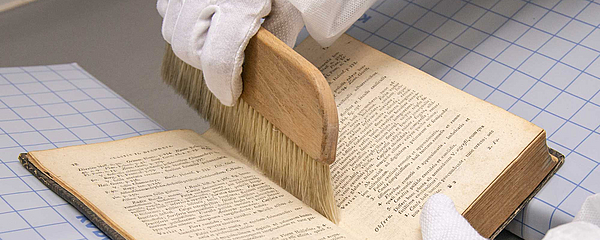
A gloved hand runs a brush through the crease of a book.

Have You Heard of... the SuUB’s Restoration Workshop?

Equipped with an array of tools that includes brushes, book support wedges, and soot sponges, the restoration workshop saves historical books from decay. Welcome to a slightly different tour of the campus!

  • Go to page: aaq Akkreditierung
  • Go to page: Gütesiegel des Deutschen Hochschulverbands
  • Go to page: EMAS Zertifizierung für geprüftes Umweltmanagement
  • Go to page: Zertifikat audit familiengerechte hochschule
  • Go to page: Audit „Internationalisierung der Hochschulen“ der HRK
  • Go to page: Logo Audit "Vielfalt gestalten" des Stifterverbandes
  • Go to page: CHE Ranking
  • Go to page: Siegel Gründungsradar des Stifterverbandes
  • Go to page: Logo of the HR Excellence in Research Award