Homepage

News

Tropical rivers breathe carbon

About half of the carbon dioxide that is produced by humankind, and which plays an important role in global warming, is taken up by seas and oceans. In addition to the oceans, however, large tropical river systems can also store substantial amounts of carbon, which are released when the climate changes. This has been verified in a new scientific publication by Dr. Enno Schefuß of MARUM, the Center for Marine Environmental Sciences at the University of Bremen, who studied an older sediment core using advanced methods. Results of the work by Schefuß and his team have been published in the journal Nature Geoscience.

In the warm and humid environments of the tropics, such as the rain forests, plants take up a large amount of carbon dioxide (CO2). At the same time, microbial activity in the soil is very pronounced under these conditions, which means that organic material is rapidly broken down again and converted back to CO2. Thus, in marine sediments directly offshore from tropical river estuaries no aged plant material should actually be deposited. At least this has been generally assumed so far, according to Dr. Enno Schefuß.

The sediment core investigated, however, comprising deposits off the mouth of the Congo River, contains some very old organic material. Using radiocarbon methods, the scientists have determined the age of molecular fossils, which are specific chemical components of plants, and of microscopically small wood particles. “The organic components were much older than the depositional age of the sediments, which surprised us at first,” says Schefuß. The core was retrieved during an expedition in 2002 and was studied using highly sophisticated analytical methods. Only the topmost, or youngest, sample from the core showed a relatively young age. The reason for this, according to Schefuß, was atmospheric nuclear testing carried out through the year 1963. These drastically increased the content of atmospheric radioactive carbon (14C), which is used to determine the age. “These high 14C levels overprint all modern samples,” explains the geoscientist, “and the true age is masked by this effect.” So the rivers actually transport older organic material, whose true age is simply not detected. “This fact changes our view of the carbon cycle.”

Hot on the heels of 3.000 year-old organic material

But where does the old organic material come from? The wood particles, for example, which were 3,000 years old when they were deposited? “We found a systematic relationship between age and humidity,” says Schefuß. Even under the relatively dry present-day conditions in the Congo, the conversion processes occur rapidly. It is thus impossible that they are directly regulated by humidity. It can only be explained, in fact, by a different source, which releases carbon when aridity increases.

Special analytical techniques by the English colleagues helped in answering this question. In the samples, the remains of specific, methane-consuming bacteria were discovered, which provided the crucial evidence: the Congo Basin is not completely covered by rain forest. In the center, where several tributaries flow into the Congo, there is an area that is continuously covered by water like a swamp. “The area is about the size of Switzerland and was relatively unknown until recently because it is hidden beneath a dense forest. All of the organic material that goes into the swamp remains fairly well preserved under the oxygen-free conditions. The methane oxidizers live here,” explains Schefuß. The study suggests that the swamp must have been significantly larger in the past. As it dried out the old organic material was released. “What we see in the sediment record, in the stable components that survived decay and transport, are merely the indicators of large CO2 releases,” says Schefuß. The significantly greater portion of released carbon goes directly into the atmosphere as CO2. “This illustrates the fact that wetland areas in tropical river systems are an important storehouse for carbon. If they dry out, either by natural causes or human activity, CO2 is released,” summarizes Schefuß. The Bremen geochemist is convinced that, in the future, the role of tropical wetland areas will have to be more persistently considered in CO2 models. The new interpretation of these data could also serve as a model for comparable areas, such as the Amazon.

Furthermore, the study highlights the importance of sediment cores from the sea floor as climate archives. “There are no climate archives on land that can record these processes. In the areas that dry out the material is transported away. In the remaining swamp areas the material continues to be conserved,” stresses Schefuß. These processes can only be observed offshore near river mouths, where the released stable organic material is finally deposited. “Climate fluctuations in the past thus serve as natural experiments to help us better assess the impacts of the current climate change.”

Publication: 
Enno Schefuß, Timothy I. Eglinton, Charlotte L. Spencer-Jones, Jürgen Rullkötter,
Ricardo De Pol-Holz, Helen M. Talbot, Pieter M. Grootes, Ralph R. Schneider: Hydrologic control of carbon cycling and aged carbon discharge in the Congo River basin.
Published in: Nature Geoscience, DOI: 10.1038/ngeo2778

Contact:
Dr. Enno Schefuß
Telephone: +49 421 218-65526
E-Mail: eschefussprotect me ?!marumprotect me ?!.de

Further information / photo material:
Ulrike Prange
MARUM Public Relation
Telefon: +49 421 218-65540
E-Mail: medienprotect me ?!marumprotect me ?!.de
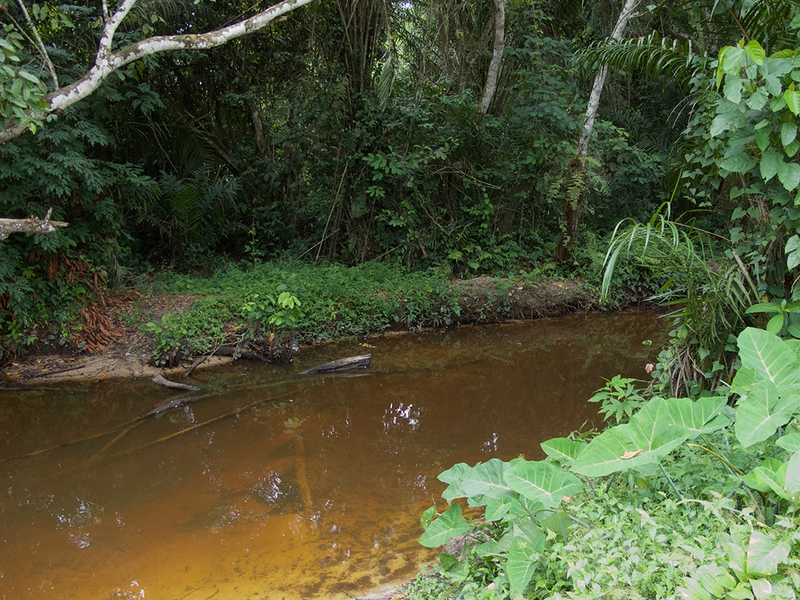
Flussbett in den Tropen
Side Stream of Congo

Events

27. Apr
Info-Veranstaltung: Lehramt studieren an der Uni Bremen
Zoom
15:30 17:00
More
27. Apr
“Über der Tatra blitzt es.” Die umkämpfte Demokratie in der Slowakei
Europapunkt Bremen
18:00 19:30
More
28. Apr
Mittagskonzert: Konkrete Abstraktionen
Theatersaal der Universität
12:30 12:55
More
28. Apr
Goodbye Green (New) Deal? Von der blockierten grünkapitalistischen Transformation zum postliberalen Kapitalismus
Forum am Domshof, Raum: 500.01
16:00 18:00
More
28. Apr
„Versäumte Bilder“ – Ausstellung und Public Lecture im Forum am Domshof
Forum am Domshof
18:00 19:30
More
29. Apr
AI Policy Framework for University Education
NW1, H3
16:00 17:30
More
29. Apr
Aus den Akten auf die Bühne - Reichsführers gehorsamster Becher: Vom SS-Standartenführer zum Millionär
Theater am Leibnizplatz
19:00 21:30
More
05. May
Mittagskonzert: Sleepwalker's Station
Theatersaal der Universität
12:30 12:55
More
05. May
Die Emanzipatorische Katastrophe. Transformationspersspektiven jenseits des öko-emanzipatorischen Projekts
Forum am Domshof, Raum: 500.01
16:00 18:00
More
05. May
„Versäumte Bilder“ – Ausstellung und Public Lecture im Forum am Domshof
Forum am Domshof
18:00 19:30
More
05. May
Kuvert Veranstaltung: How to survive as a female artist  Buchpräsentation mit Petra Fiebig, Franzi Bauer & Annette Hans 
19:00 21:00
More
06. May
Info-Veranstaltung: Master Ungleichheiten in Geschichte und Gegenwart
Zoom
09:00 10:00
More
06. May
Studienplatzbewerbung an der Uni Bremen
Zoom
15:30 17:00
More
06. May
Vorlesungsreihe ProfsgegenRechts: Prof. Florian Meinel (Göttingen) "Die Parteilichkeit der Neutralität. Über die politische Funktion eines umkämpften Rechtsprinzips."
Rotunde, Cartesium
18:15 20:00
More
07. May
Politikwissenschaftliche Masterprogramme stellen sich vor
Zoom
10:00 12:00
More
07. May
Prof. Dr. Björn Poppe (Carl von Ossietzky Universität Oldenburg): Von der Klinik ins All: Anwendungen der Medizinischen Strahlenphysik zwischen Klinik und Raumfahrt
Hörsaal H3, Geb. NW1, Otto-Hahn-Allee 1, 28359 Bremen
16:00 17:00
More
07. May
Rasender Stillstand. Belarus – eine Revolution und die Folge
Europapunkt Bremen
18:00 19:30
More
07. May
Kuvert Veranstaltung: Karla Zipfel, Berlin, Künstlerinnengespräch "Mittelklassig modernisiert"
19:00 21:00
More
11. May
Cinemas in Soviet Russia during the 1920s: A New Culture of Leisure
IW3 0330
18:15 19:45
More
12. May
Mittagskonzert: Klangfarben Kolumbiens – Tonkunst zwischen Tradition und Moderne
Theatersaal der Universität
12:30 12:55
More
12. May
studio Vortrag: Julia Meer, Hamburg Franzbrötchen und Feminismus – Strategien zur Aktivierung der Sammlung Grafik und Plakat des MK&G
18:00 20:00
More
12. May
Aus den Akten auf die Bühne - Karrieren in Bremen nach 1945 - Kurt A. Becher – Käthe Popall – Alfred Ries
Theater am Leibnizplatz
19:00 21:30
More
13. May
Info-Veranstaltung Master Public History
Zoom
15:00 16:00
More
18. May
Kampf um die Freiheit. Georgien und der lange Arm des Kreml
Kassenhalle am Domshof
18:00 19:30
More
19. May
Mittagskonzert: Carpe Noctem – Masken, Monster, Musical
Theatersaal der Universität
12:30 12:55
More
19. May
Die Klimawende JETZT organisieren: Welche Rolle spielt die Transformation der Arbeit?
Forum am Domshof, Raum 50001
16:00 18:00
More
19. May
Vorlesungsreihe ProfsgegenRechts: Prof. Rahel Jaeggi (Humboldt Uni) "Regression der Demokratie."
Rotunde, Cartesium
18:15 20:00
More
20. May
Hitzeschutz im Alter - Einfluss von Wohnbedingungen, ausreichender Flüssigkeitszufuhr und sozialen Faktoren
Haus der Wissenschaft
18:00 19:30
More
20. May
Aus den Akten auf die Bühne - Reichsführers gehorsamster Becher: Vom SS-Standartenführer zum Millionär
Theater am Leibnizplatz
19:00 21:30
More
21. May
Data Snacks | "From Data to Action: How Climate Data Inform Decisions"
Online (Zoom)
13:00 13:30
More
21. May
Prof. Dr. Susanne Glaser (Uni Bonn): New developments in space geodetic techniques for a better understanding of our changing Earth
Hörsaal H3, Geb. NW1, Otto-Hahn-Allee 1, 28359 Bremen
16:00 17:00
More
26. May
Mittagskonzert: Von Ballade bis Groove VIII - Steel String
Theatersaal der Universität
12:30 12:55
More
26. May
Info-Veranstaltung Master Public History
SFG, Raum 1010
16:00 17:00
More
28. May
Data Snacks | "From Prompting to Orchestrating: AI Agents for Smarter Research"
Online (Zoom)
13:00 13:30
More
28. May
Info-Veranstaltung: Studieren in Bremen und Bremerhaven
Zoom
16:00 18:00
More
28. May
Vorlesungsreihe ProfsgegenRechts: Prof. Dagmar Herzog (CUNY, New York) "Der neue faschistische Körper." Organisiert von U Bremen WOC International Guestprofessorship 2026 & Profs gegen Rechts.
Weserburg, Bremen
18:30 20:00
More
01.02. Jun
Interdisziplinäre Tagung - Lucretia - Schändung. Tod. Umsturz.
Forum Am Domshof, 28195 Bremen
09:30 18:45
More
01. Jun
Als wäre es vorbei. Texte aus dem Krieg
Haus der Wissenschaft
19:30 21:00
More
02. Jun
Mittagskonzert: Werke von Franz Schubert
Theatersaal der Universität
12:30 12:55
More
02. Jun
Greenlash – verflüchtigt sich der Geist des grünen Kapitalismus?
Forum am Domshof, Raum: 500.01
16:00 18:00
More
02. Jun
Felipe Fernandes (Universität Freiburg) “Water, Infrastructure and Urban Violence in the Port-City of Buenaventura, Colombia.”
Universität Bremen, GW2 B1216
16:15 18:00
More
02. Jun
Aus den Akten auf die Bühne - Reichsführers gehorsamster Becher: Vom SS-Standartenführer zum Millionär
Theater am Leibnizplatz
19:00 21:30
More
03. Jun
Geographisches Kolloquium mit Prof. Dr. Iris Möller
GW2 B1150
16:15 18:00
More
04. Jun
Data Snacks | "Social Media Data Access in 2026: Making Sense of a Moving Target"
Online (Zoom)
13:00 13:30
More
08. Jun
Ukrainische Sprachdebatten. Aushandlungen von Zugehörigkeit, Legitimität und Authentizität vor und nach 2022
IW3 0330
18:15 19:45
More
09. Jun
Mittagskonzert: Tangoevolución - von Gardel bis Piazzolla
Theatersaal der Universität
12:30 12:55
More
09. Jun
Industrielle Naturverhältnisse. Gewerkschaftliche Akteure zur Dialektik von Natur und Gesellschaft
Forum am Domshof, Raum 500.01
16:00 18:00
More
10.11. Jun
vocatium
Messe in Halle 6, Bremen
08:30 15:00
More
10. Jun
Klimaanpassung in der Bremer Innenstadt - ein Klima-Spaziergang
Haus der Wissenschaft
18:00 19:30
More
10. Jun
Vorlesungsreihe ProfsgegenRechts: Prof. Andreas Petrik (Halle): „Wie halten wir den neuen Faschismus auf? Wehrhafte Demokratie in Schule und Universität aus politikdidaktischer Sicht.“
Rotunde, Cartesium
18:15 20:00
More
11. Jun
Data Snacks | "When Research Data Outgrow Spreadsheets: An Overview of Relational Databases and SQL"
Online (Zoom)
13:00 13:30
More
11. Jun
Dr. Odele Straub (Exzellenz-Cluster "Origins", München): Vom Urknall bis zur ersten Zelle
Hörsaal H3, Geb. NW1, Otto-Hahn-Allee 1, 28359 Bremen
16:00 17:00
More
13. Jun
OPEN CAMPUS
Campus der Universität Bremen
All day
More
13. Jun
Open Campus der Universität Bremen
All day
More
15. Jun
Am Rande des Abgrunds: Literarische Darstellungen des Holocaust in der Sowjetunion
IW3 0330
18:15 19:45
More
15. Jun
Gesellschaftliche Unterschiede: Warum wir uns voneinander untrscheiden und warum das (manchmal) wichtig ist
Hanse-Wissenschaftskolleg, Lehmkuhlenbusch 4, 27753 Delmenhorst
19:30 21:00
More
16. Jun
Mittagskonzert: Iazzika Jazz Quintet
Theatersaal der Universität
12:30 12:55
More
17. Jun
Zwischen Erschöpfung und Systemversagen? ME/CFS und Long Covid im Fokus von Medizin, Politik und Gesellschaft.
Zentralstelle der Landesfrauenbeauftragten (ZGF) Faulenstraße 14-18, 28195 Bremen
15:00 18:00
More
18. Jun
Data Snacks | "Responsible Text Mining: A Framework for Fair, Transparent, and Ethical AI in Research"
Online (Zoom)
13:00 13:30
More
18. Jun
Prof. Dr. Tobias Voß (TU Braunschweig): Titel folgt
Hörsaal H3, Geb. NW1, Otto-Hahn-Allee 1, 28359 Bremen
16:00 17:00
More
19. Jun
Info-Veranstaltung Master Public History
Zoom
10:00 11:00
More
22. Jun
Info-Veranstaltung: Lehramt studieren an der Uni Bremen
Zoom
15:30 17:00
More
22. Jun
Queer-Fanfiction vs. politische Homophobie: Umstrittene Erinnerungen an den Zweiten Weltkrieg in Russland
IW3 0330
18:15 19:45
More
23. Jun
Info-Veranstaltung: Master Ungleichheiten in Geschichte und Gegenwart
Zoom
09:00 10:00
More
23. Jun
Mittagskonzert: In Tango veritas
Theatersaal der Universität
12:30 12:55
More
24. Jun
Info-Tag für Studieninteressierte 2026
Campus der Uni Bremen
08:30 16:00
More
24. Jun
Wireless Communication Protocol Parameter Optimization using Q Learning
NW1, H3
16:00 17:30
More
25. Jun
Data Snacks | "Secure and Practical AI Services for Research: The GWDG AI Services"
Online (Zoom)
13:00 13:30
More
25. Jun
Dr. Frank Steier (OHB Bremen): LISA
Hörsaal H3, Geb. NW1, Otto-Hahn-Allee 1, 28359 Bremen
16:00 17:00
More
28. Jun
Oper pur – Pietro Mascagni: Cavalleria rusticana
Metropol Theater Bremen
19:00 21:00
More
29. Jun
Civil War Anxiety in Russian: Political Emotions from Perestroika to the “Wild Nineties”
IW3 0330
18:15 19:45
More
30. Jun
Mittagskonzert: Im Zauber der Klänge: Klaviermusik von Klassik bis Filmmusik
Theatersaal der Universität
12:30 12:55
More
30. Jun
Thiago Barbosa (Leipzig) "Lithium Extractivism and Indigenous (Un)futurism in Brazil."
Universität Bremen, GW2 B1216
16:15 18:00
More
02. Jul
Dr. Martin Eckstein (Universität Hamburg): Titel folgt
Hörsaal H3, Geb. NW1, Otto-Hahn-Allee 1, 28359 Bremen
16:00 17:00
More
06. Jul
Auf dem Weg zu einem „gemeinsamen europäischen Haus“? Der Boom der westdeutsch-sowjetischen Städtepartnerschaften in der Perestrojka
IW3 0330
18:15 19:45
More
07. Jul
Mittagskonzert: Trio Ata la Taba – Argentinische Folklore
Theatersaal der Universität
12:30 12:55
More
09. Jul
Dr. Giuseppe Romano (MIT-IBM Watson AI Laboratory): Titel folgt
Hörsaal H3, Geb. NW1, Otto-Hahn-Allee 1, 28359 Bremen
16:00 17:00
More
17. Aug
Bernsteine: Zeitkapseln der Evolution
Hanse-Wissenschaftskolleg, Lehmkuhlenbusch 4, 27753 Delmenhorst
19:30 21:00
More
03. Sep
Warum wir wählen, was wir wählen: Unser Wahlverhalten in unsicheren Zeiten
VHS Delmenhorst, Am Turbinenhaus11, 27749 Delmenhorst
19:30 21:00
More
08. Sep
20 Jahre Kriseninterventionsteam Stalking (Stalking-KIT) in Bremen
Forum am Domshof
10:00 17:00
More
05. Oct
Wahlmanipulation im digitalen Zeitalter: Wo liegen die Gefahren?
Hanse-Wissenschaftskolleg, Lehmkuhlenbusch 4, 27753 Delmenhorst
19:30 21:00
More
29. Oct
Prof. Dr. Michèle Heurs (Uni Hannover und DESY/DZA): Titel folgt
Hörsaal H3, Geb. NW1, Otto-Hahn-Allee 1, 28359 Bremen
16:00 17:00
More
02. Nov
Wölfe in Niedersachsen
Hanse-Wissenschaftskolleg, Lehmkuhlenbusch 4, 27753 Delmenhorst
19:30 21:00
More
12. Nov
Info-Veranstaltung: Studieren in Bremen und Bremerhaven
Zoom
16:00 18:00
More
All Events

Studies

Students walking along the MZH and chatting

Studying at the University of Bremen

Whether it be the compact campus, the diverse study programs on offer, or the green cycling city – a degree at the University of Bremen has a lot to offer.

You can choose from a broad range of degree program at the University of Bremen:

  • more than 100 bachelor’s and master’s degree programs
  • the state examination in law
  • international degree courses and further training offers

Profile

The University of Bremen is one of Germany’s medium-sized universities. In its mission statement, the university prioritizes:

Academic Consultation

Visit the following points of contact for information on studying:

Applying to Study

We provide comprehensive and detailed information on applications and enrollment for the following areas:

All about Research

Test tubes with different coloured liquids.

High Level of Third-Party Funding

A great strength of the University of Bremen is its considerable success in the acquisition of third-party funds, both in individual as well as in collaborative research. The German Research Foundation (DFG) is the largest provider of third-party finance: Besides the MARUM Cluster of Excellence, the University of Bremen is currently involved in no less than seven Collaborative Research Centers, as well as a number of research groups and priority programs.

Zwei Personen bei der gemeinsamen Arbeit im Labor.

Strategic Promotion of Talent

The targeted promotion of young talent, unlocking potential, and early independence are among the guiding principles of the University of Bremen. We offer intensive support to young academics in six DFG research training groups, numerous junior research groups and also through doctoral programs offered in cooperation with non-university research institutions.

Zwei Lehrende arbeiten vor Zuhörern an einem Flipchart.

Lifelong Learning

The University of Bremen is a place of lifelong learning. With our offers of continuing education we enable you to acquire knowledge of cutting-edge research. Discover the wide range of our offers and benefit from the unique combination of practice-oriented learning and innovation.

Facets of the University of Bremen

Diversity

The diversity of our students and staff is both a framework as well as a prerequisite for high quality in research and teaching. As a cross-sectional priority and central profiling feature, we take account of diversity in our teaching and learning formats, in the structure of degree programs, and in the content of research and teaching. Moreover, diversity orientation and equal opportunity also guide us in the composition of teams and the design of counseling.   

International

Internationality is a strategic profiling objective of the University of Bremen. In keeping with our self-image as an international university, we see internationalization as a process that extends into all areas of the university – whether research, studies or administration. People from more than 100 nations enrich campus life. We are networked worldwide. In close cooperation with our partners, we work on the advancement of knowledge and finding solutions to global challenges.

Sustainability

The University of Bremen has been committed to sustainable development for years. Numerous projects and measures exist in the areas of research, teaching, operations, governance, and transfer, supporting the implementation of the 17 Sustainable Development Goals (SDGs) by the United Nations. Among them are the outstanding EMAS environmental management program, the university’s promotion of social sustainability as well as several research institutions with a focus on sustainability

Have you Heard of...?

There is a lot to be discovered on campus. What’s behind all those doors? up2date. online magazine knocks on some of them to find out. Welcome to a slightly different tour of the campus.

A man in front of a green screen is looking into the camera.

Have You Heard of... the ZMML?

Learning platform, testing center, online courses, lecture halls with opencast technology, a film studio, and much more – when you see digital teaching in action on campus, the ZMML is usually behind it.

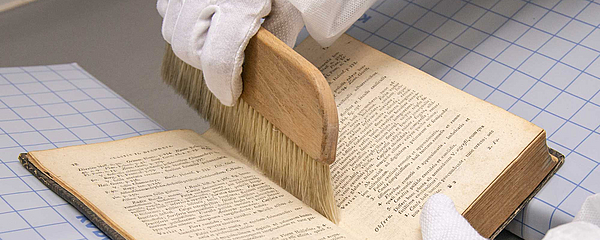
A gloved hand runs a brush through the crease of a book.

Have You Heard of... the SuUB’s Restoration Workshop?

Equipped with an array of tools that includes brushes, book support wedges, and soot sponges, the restoration workshop saves historical books from decay. Welcome to a slightly different tour of the campus!