Aktuelles & Neuigkeiten

Gastvortrag von Nadine Mathé (Universität Hamburg) und studentische Projektvorstellungen

Vorstellung studentischer Forschungsprojekte "Linguistic Landscapes: Sprachlandschaften von Freizeiträumen" sowie Gastvortag "Schriftzeichen, Schilder, Sprachspiele: Eine linguistische Erkundung eines japanischen Universitätscampus"

Herzliche Einladung zur Vorstellung studentischer Forschungsprojekte und einem Gastvortrag am 17.02.2026 von 12:00 bis 14:30 Uhr in GW2 B2900.


Im Rahmen des Seminars "Linguistic Landscapes: Sprachlandschaften von Freizeiträumen" erforschen die Studierenden der Hispanistik und Linguistik einen sprachlichen Raum aus ihrer Freizeit. Das Projekt ist vollständig von den Studierenden geplant, durchgeführt, analysiert und aufbereitet. Die spannenden Ergebnisse aus dem Raum Bremen und Umgebung zeigen eindrucksvoll, wie multilingual unsere unmittelbare Umgebung ist und wie Macht und Hierarchien durch Sprache subtil uns begleiten.

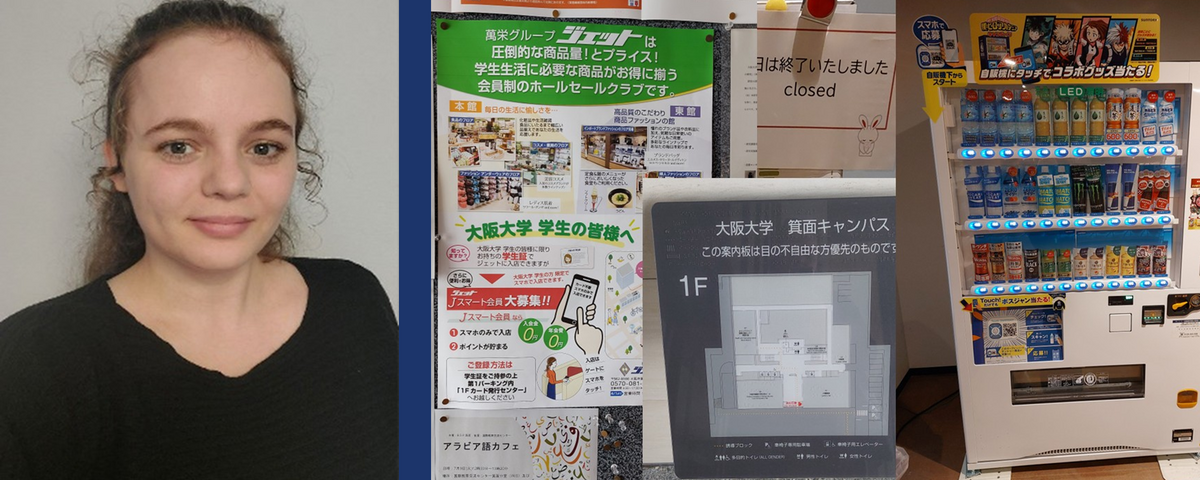
Als Rahmenprogramm präsentiert Nadine Mathé (Universität Hamburg) die Linguistic Landscape der Universität Osaka, gefördert durch die Japan Society for the Promotion of Science. Ihr Vortrag mit dem Titel "Schriftzeichen, Schilder, Sprachspiele: Eine linguistische Erkundung eines japanischen Universitätscampus" führt in die Erforschung universitärer Sprachlandschaften in Japan ein und zeigt die multilinguale Realität in einem vermeintlich monolingualen Land auf.

Logo Universität Hamburg
Poster Gastvortrag Nadine Mathé

Abstract zum Gastvortrag:

Linguistic Landscapes concern the visual communication in public spaces. This study aims to investigate the meaning of LL elements in Japanese communities focusing on students, based on a newly created corpus for quantitative analysis. The data was collected at the Minoh Campus of Osaka University. The focus of this talk lies on multilingualism, specifically on the utilisation of different Japanese and English varieties and their scripts. Especially on varieties such as yasahii nihongo, a simplified version of Japanese aimed at foreign citizens and children are in focus of this work. Additionally, the analysis concerns possible differences in the usage of English that may show inferences of Japanese especially with regard to pragmatics. Furthermore, this talk explores the question of what defines “Uniscapes” in contrast to “Schoolscapes”, since both are educational institutions. Androutsopolous and Kuhlee (2021) offer an approach which combines the categorisation from Scollon and Scollon (2003) and Ziegler et al. (2018), that serves as a possible framework for the categorisation of „Schoolscapes“.Therefore, place itself at a university is defined and how that relates to the languages being used and how they are being utilised. This includes an analysis of the kind of information that are being relied to (international) students on Campus. The dataset is based on a self-conducted study, which took place in July 2024 at the Minoh Campus in Japan. During that time photographs of LL-Elements in accessible places within the Campus where being taken. The annotation of these Elements was conducted in MAXQDA, with an annotation framework that incorporates the above-mentioned framework.